LeadRev



Summary
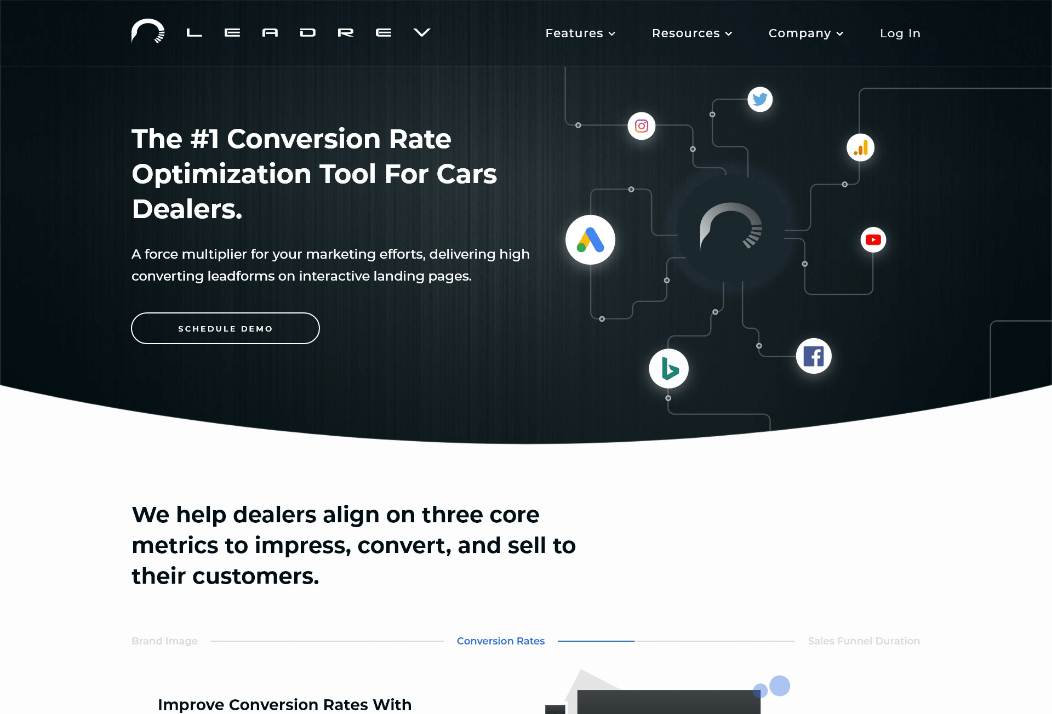
• Identified untapped business opportunity to create landing page experience for local car shoppers with purchase intent
• Launched a successful POC (LeadRev 1.0) in 2017, which increased average conversion rates by 133% (from 1.2%-2.8%) above the industry benchmark
• Ran performance tests in Google Data Studio and created journey maps to identify opportunities for a 2.0 redesign
• Facilitated 20 client interviews with dealer sales teams to uncover painpoints and new opportunities
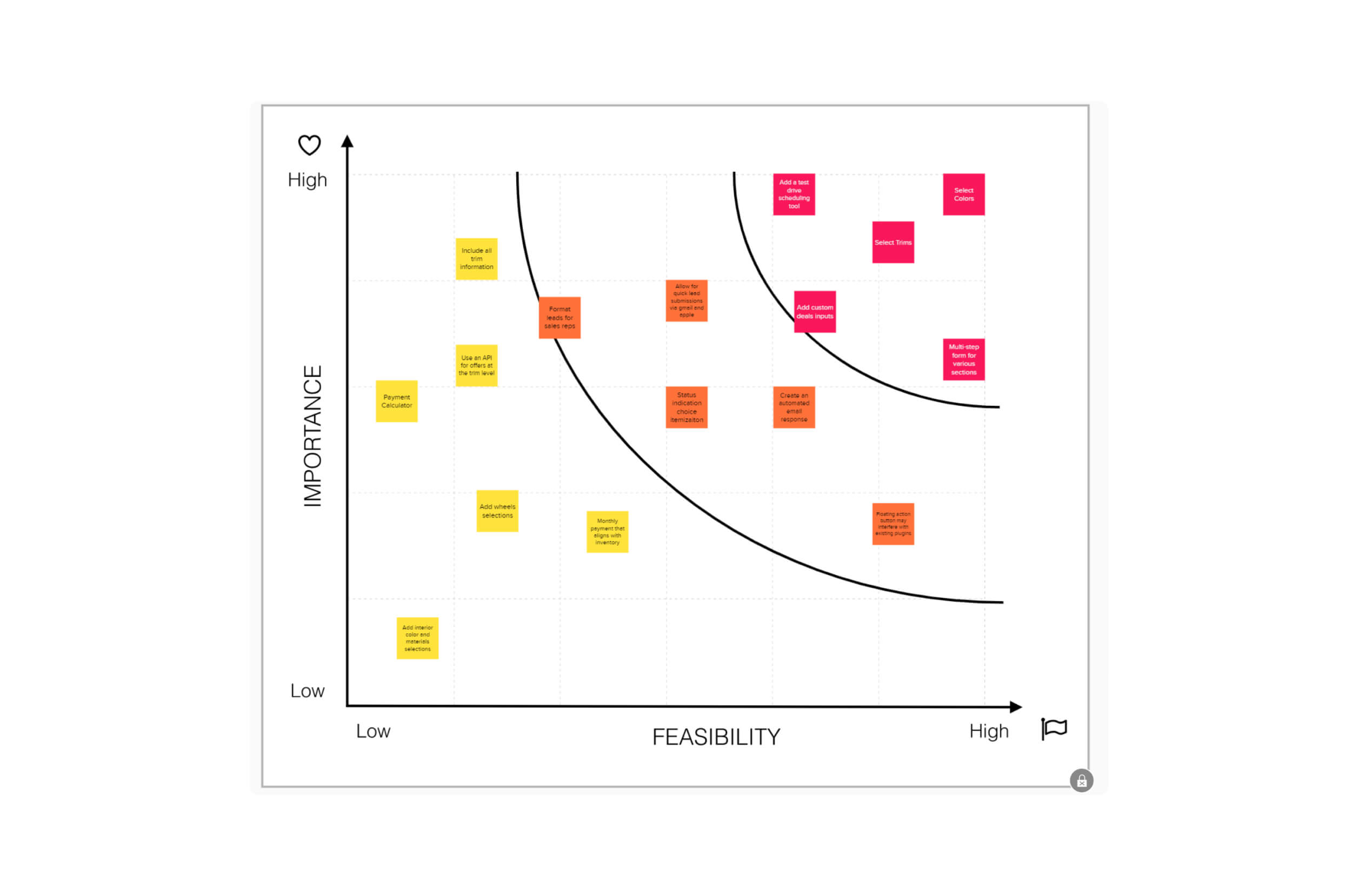
• Synthesized opportunities in a prioritization matrix as basis for redesign
• Hosted cross-functional sketching workshops to create user flow, ultimately landing on a streamlined multi-step leadform UI
• Crafted wireframes with design team, dot voted on best solutions and components
• Designed high-fidelity prototype in Adobe XD and facilitated dev handoff and visual QA
• Collaborated with ML-engineer to provide variants for multivariate testing via a genetic algorithm
• LeadRev increased conversion rates by 1300% from 0.5% to 7% above the industry benchmark and garnered $1.2M in annual revenue in it's first year
.png)
.jpg)
.jpg)
.jpg)
Solving for a black hole in the <car buying> funnel

No bottom funnel landing page in the dealer space
Local car shoppers with purchase intent enter longtail keywords into Google such as "2023 Acura RDX A-Spec Lease Deals near me" - a lucrative search query that goes unanswered by car dealer websites.

Inventories are ineffective means of communication
Because inventory leads rely on submitting interest in a single vehicle, customers struggle to communicate their often wide range of desired vehicle options

Dealers are left to guess what customers want
Misled by the perceived interests of customers from vague inventory leads, sales reps often miss the mark in their responses, sending irrelevant vehicles to entice interest.

Dealer stigma leads customers to want to negotiate online
Because of negative past experiences, and the "greasy car salesman" stereotype, customers often want to conduct part of the negotiation online.

POC had limited coverage of painpoints on both sides
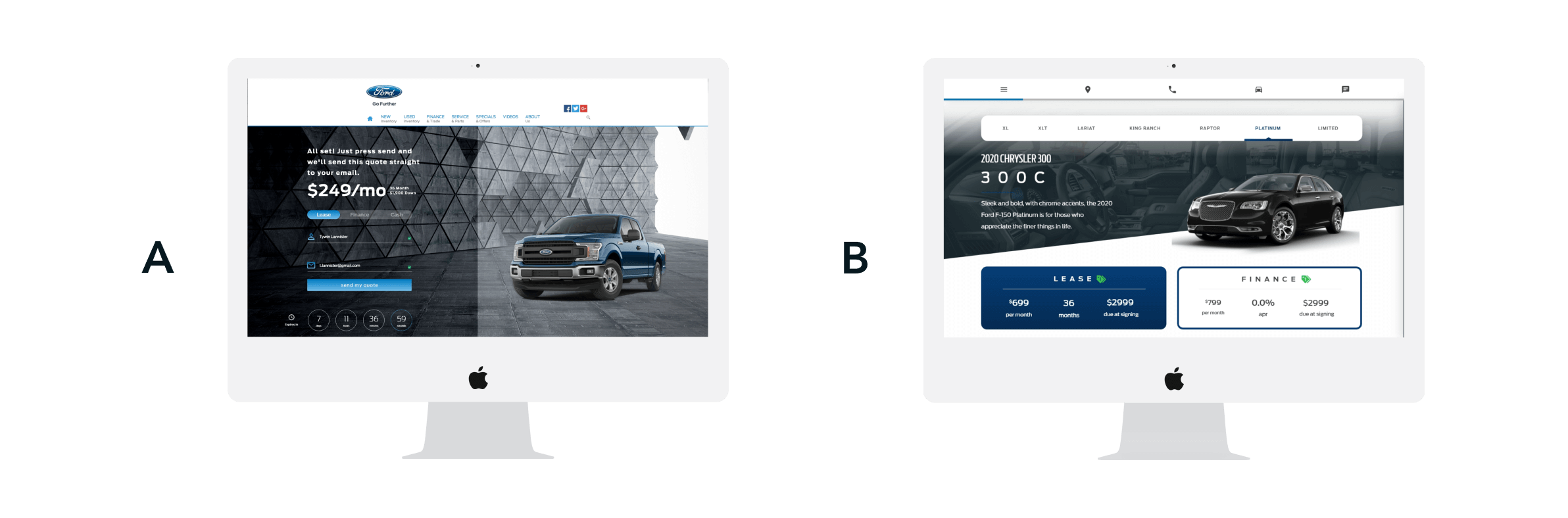
Our initialize POC only covered offers at the trim level, which seemed more real than "in-the-door" offers on the base model, but it did not cover other configuration options or deal building.
Setting the stage for the 2.0 redesign
From idea spark, to POC, to testing, these moments were in the early days of my UX career. 😬
Researching the user and client experience
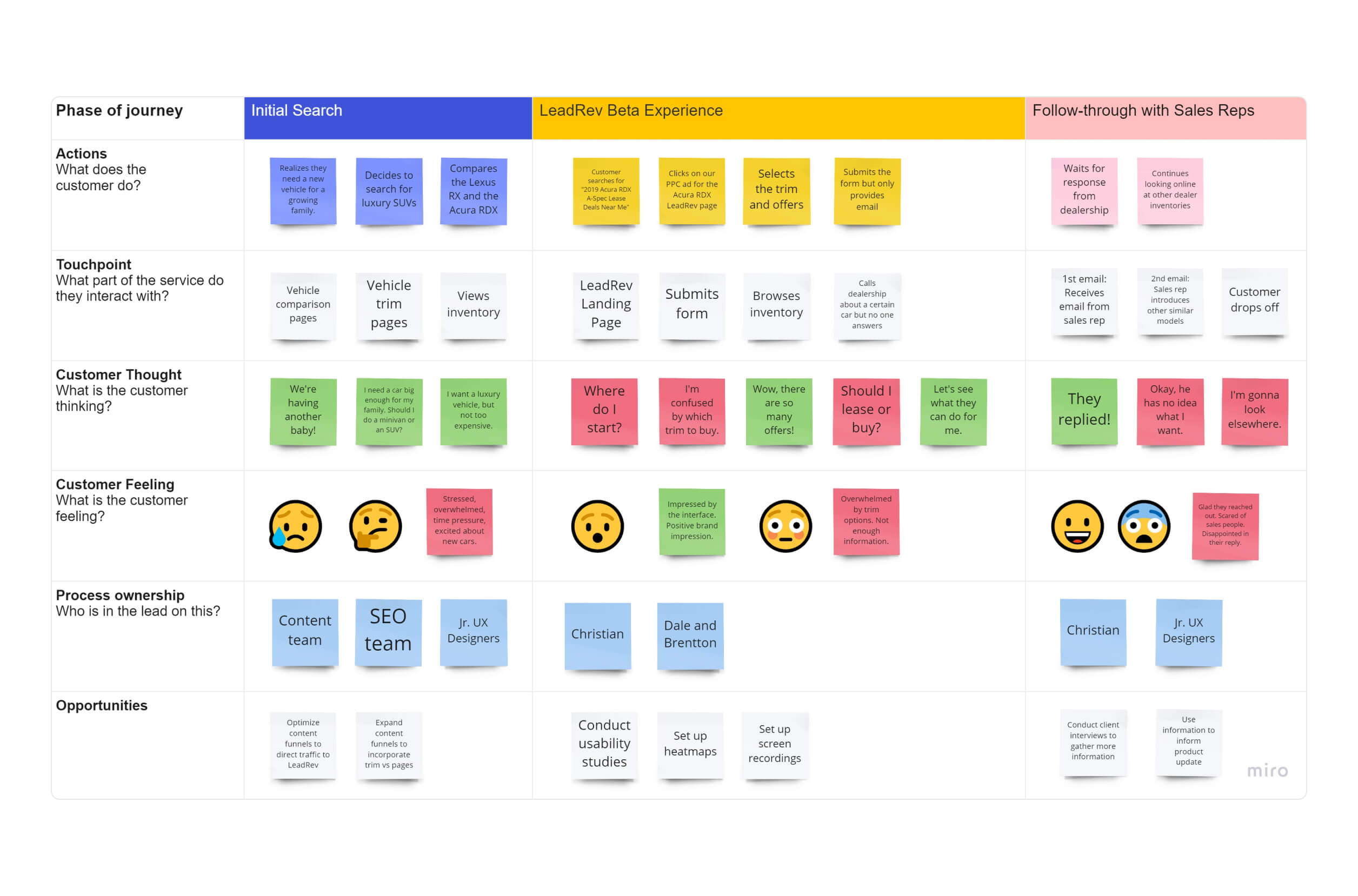
Journey mapping: Post-V2, we surveyed customers to identify opportunities and plotted them on our journey map. Key issues were confusion around "trims" terminology and desire to compare model features.
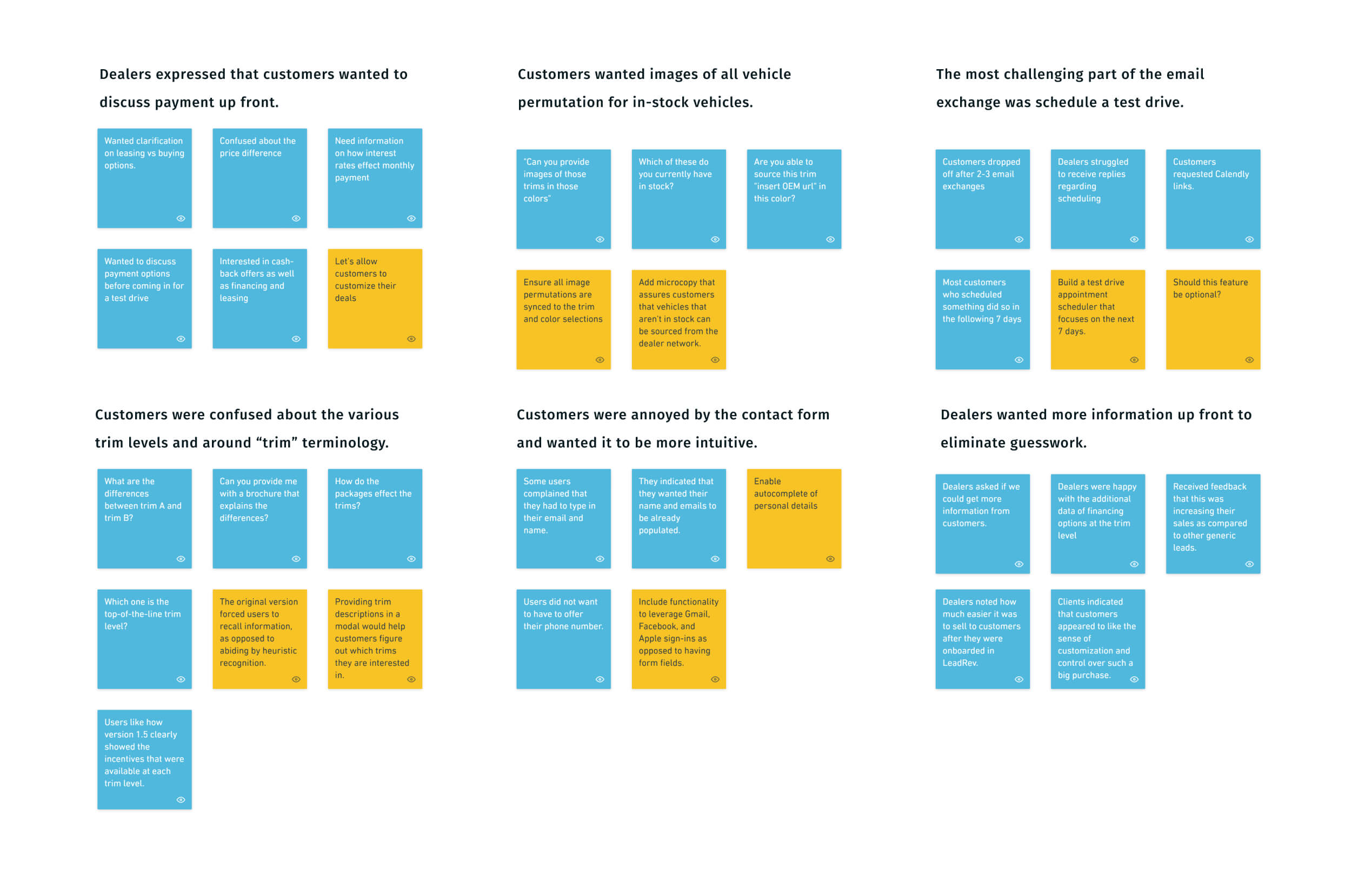
Client interviews: The key insight, however, from this exercise was the blackhole at the end. What happened after dealers received the leads? To find out, we held 20 client interviews with dealer sales reps.
Key insights: We learned a lot. Dealers were guessing what customers wanted. Customers felt unheard and wanted to bargain up front. We mapped opportunities on a priority matrix and got to work on the redesign.
Translating <research> into visual design solutions
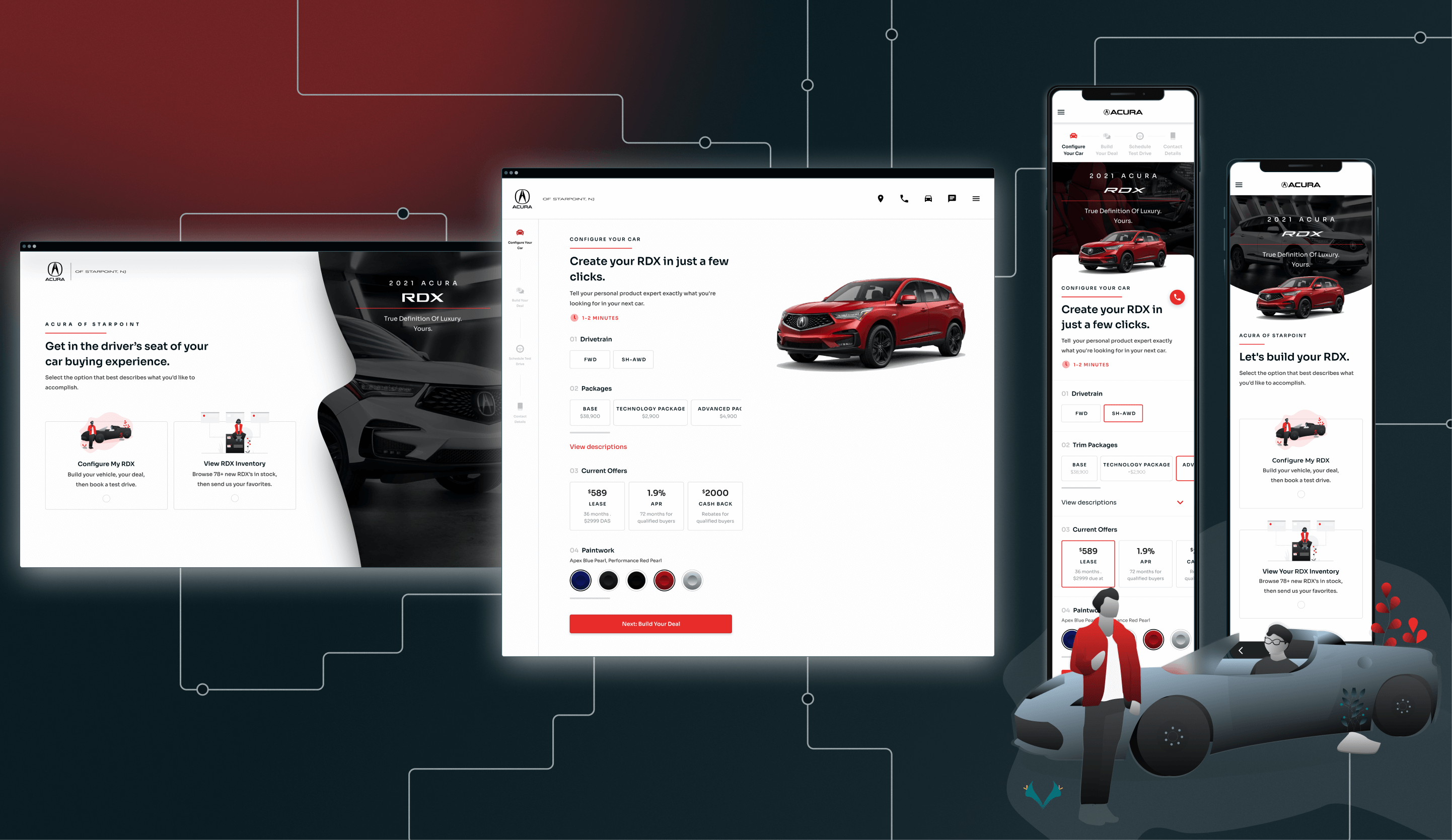
The final design featured a multi-step form that allowed shoppers to configure their car, build their deal, and book a test drive. The dealerships received these leads as rich consumer interest data, which eliminated the guesswork and expedited the 6-month sales cycle.
User flow
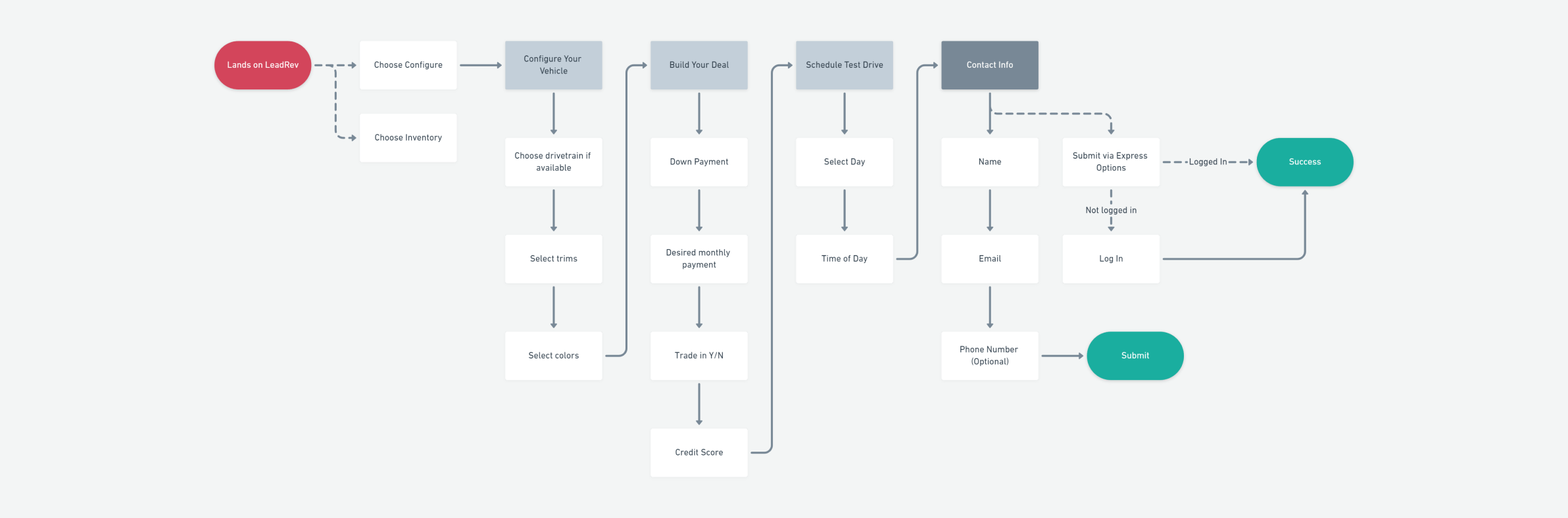
To create the roller-coaster shaped user flow below, the team of designers and I diverged to craft flows independently. Upon converging, the final artifact proposed the multi-step form that divided the experience into three major categories: vehicle configuration, deal building, and appointment scheduling. #chunkingforthewin
Wireframe
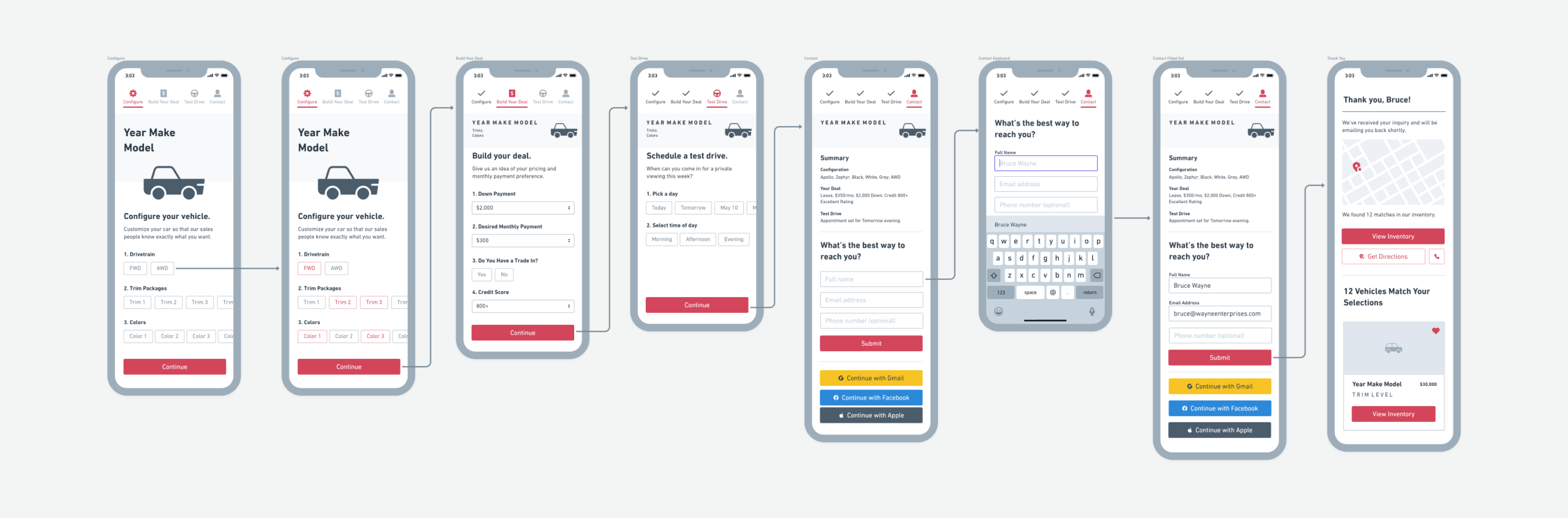
The final wires utilized a stepper component from the ReactJS, MUI library to section out the form steps. The design would obviously not be complete without the Flintstones-looking car icon that I used as a placeholder image. #yabadabadoo
User empowerment via personalization
In an exchange where shoppers often feel underfoot, the design principle of user empowerment gave users a sense of control over the entire car buying process, from indicating vehicle preferences and building their deal, to scheduling a test drive.
Configure your car
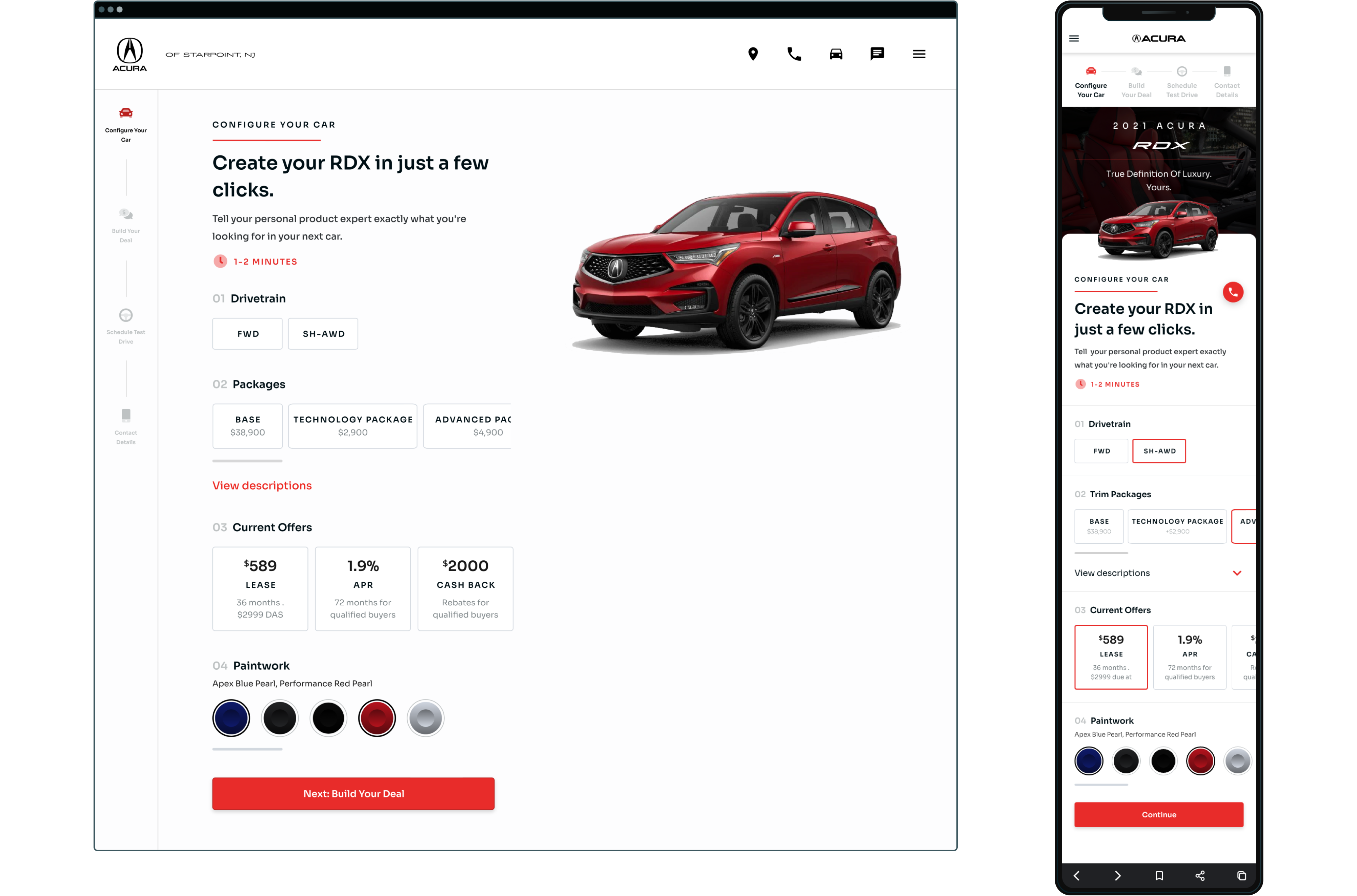
By allowing shoppers to design their future car, the configurator exemplifies the Endowment Effect, where people value something more if they feel it's theirs. On the backend, we matched the permutations of their preferences to in-stock on the dealership's lot, which allowed for more matches than an exact match model.
Build your deal
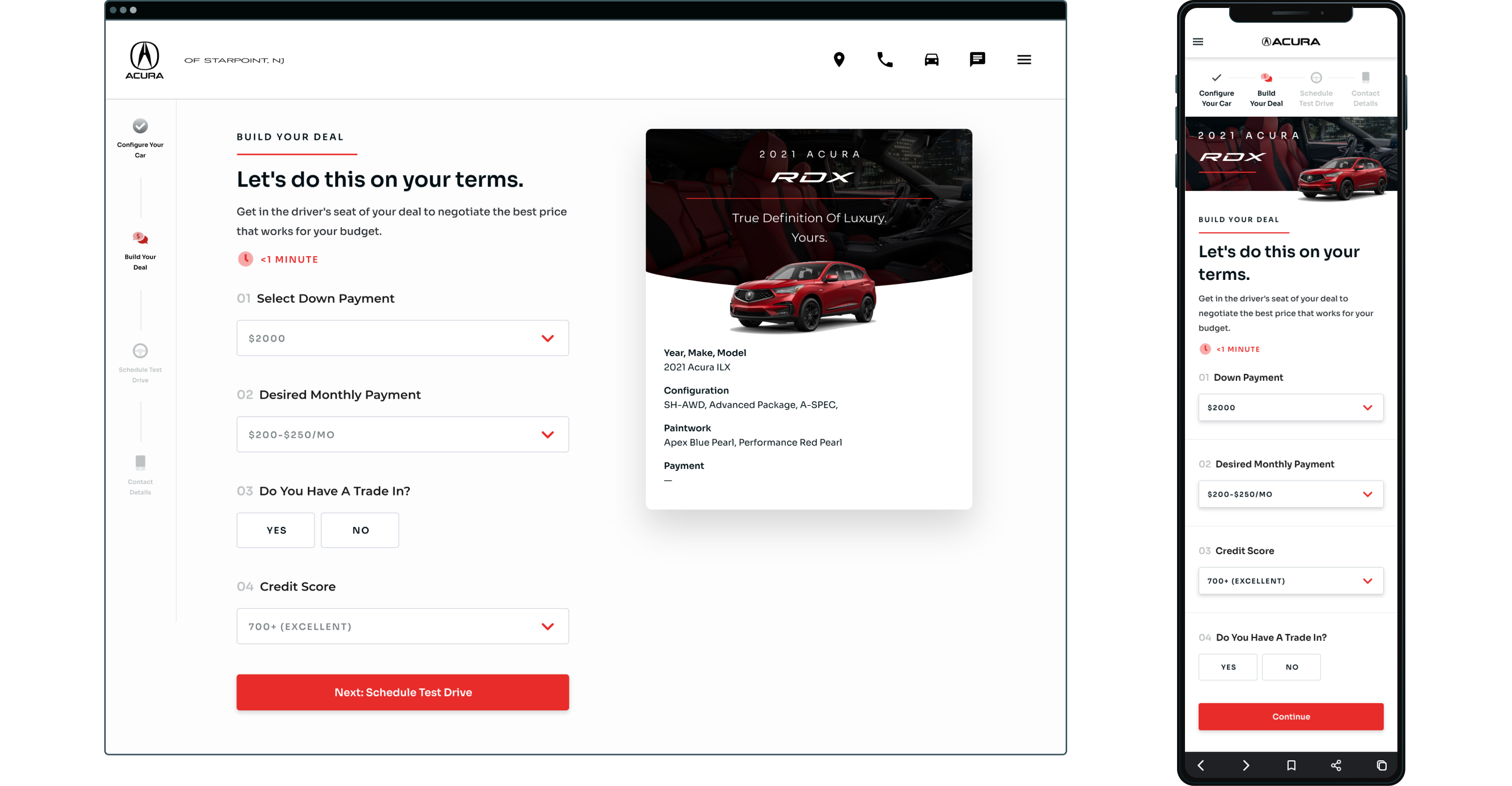
Our research confirmed that customers still hold car dealerships in a negative stigma. By providing a sense of control, LeadRev empowers shoppers to take the driver's seat in the negotiation by establishing the desired payment terms up front.
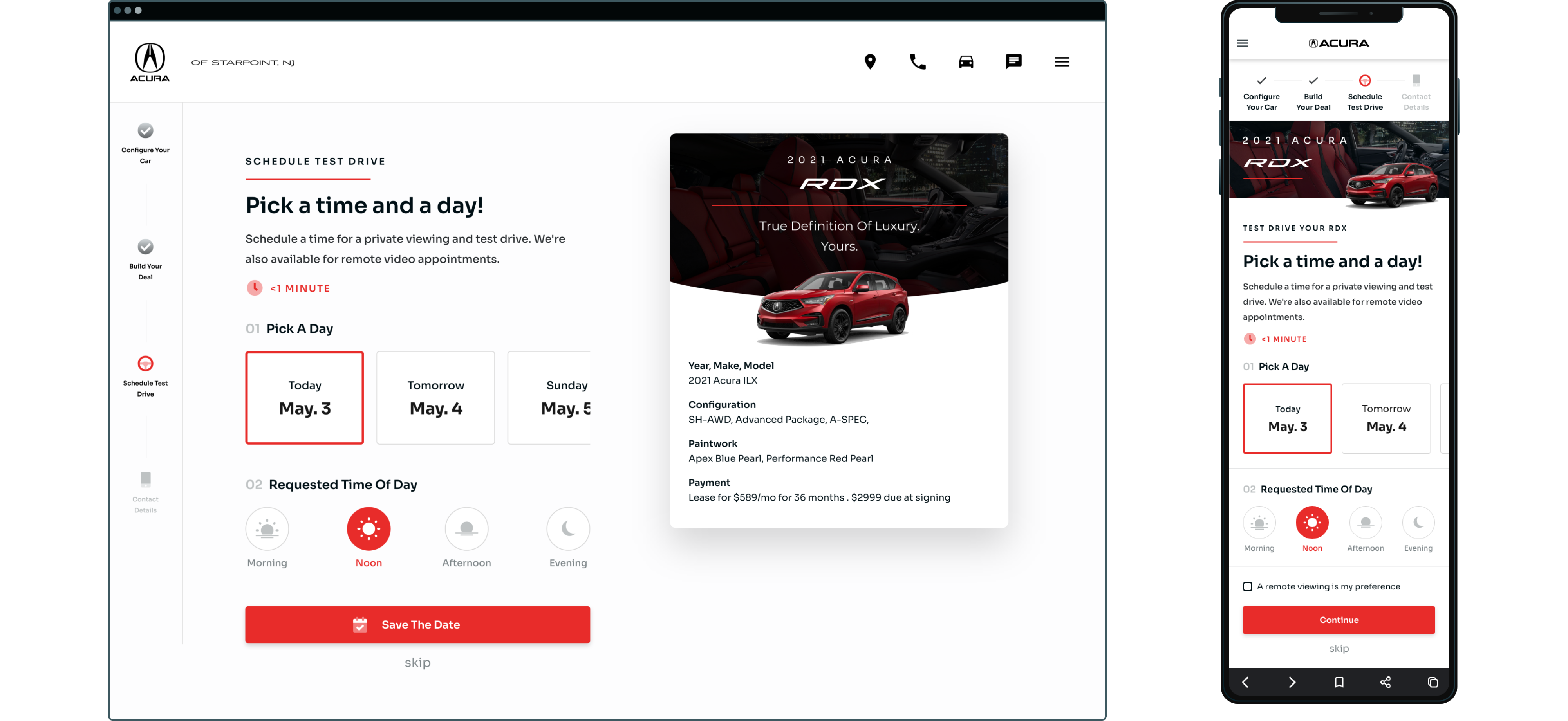
Schedule test drive
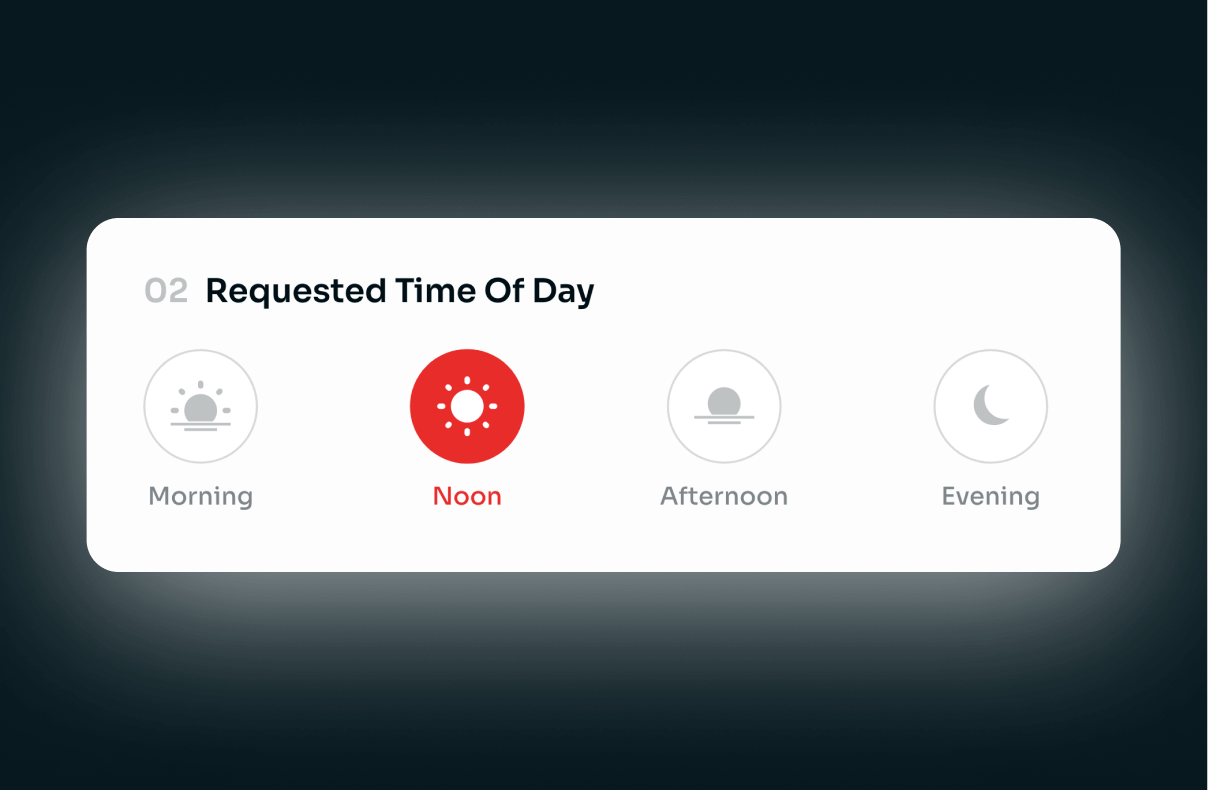
Now, excited about their vehicle and in control of the negotiation, shoppers that are ready can book their private viewing, or they can skip this step - again, avoiding backlash from the Reactance Effect. The test drive scheduling UI is based on the casual mental model we uncovered in UXR, where users preferred giving a loose timeframe (i.e., morning).
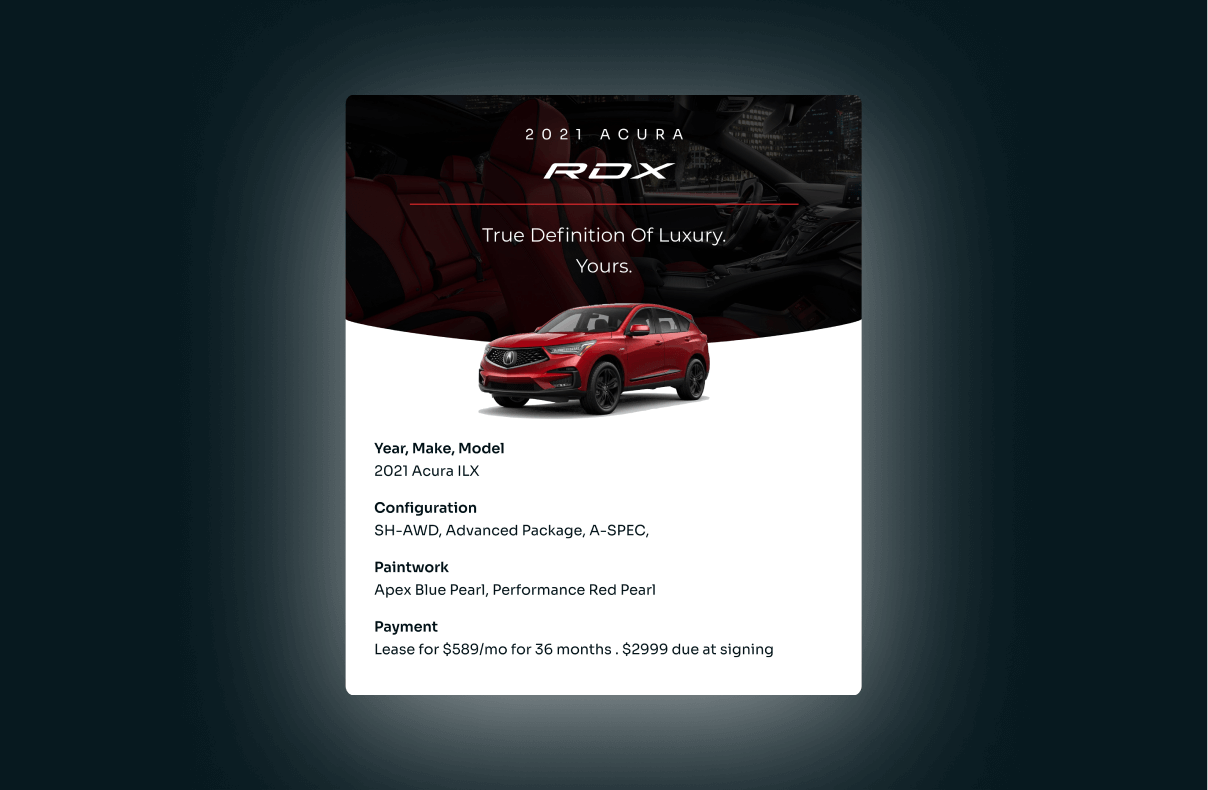
1.1 Itemization of selections
eCommerce-style selection itemization reassures the user that they are being heard.
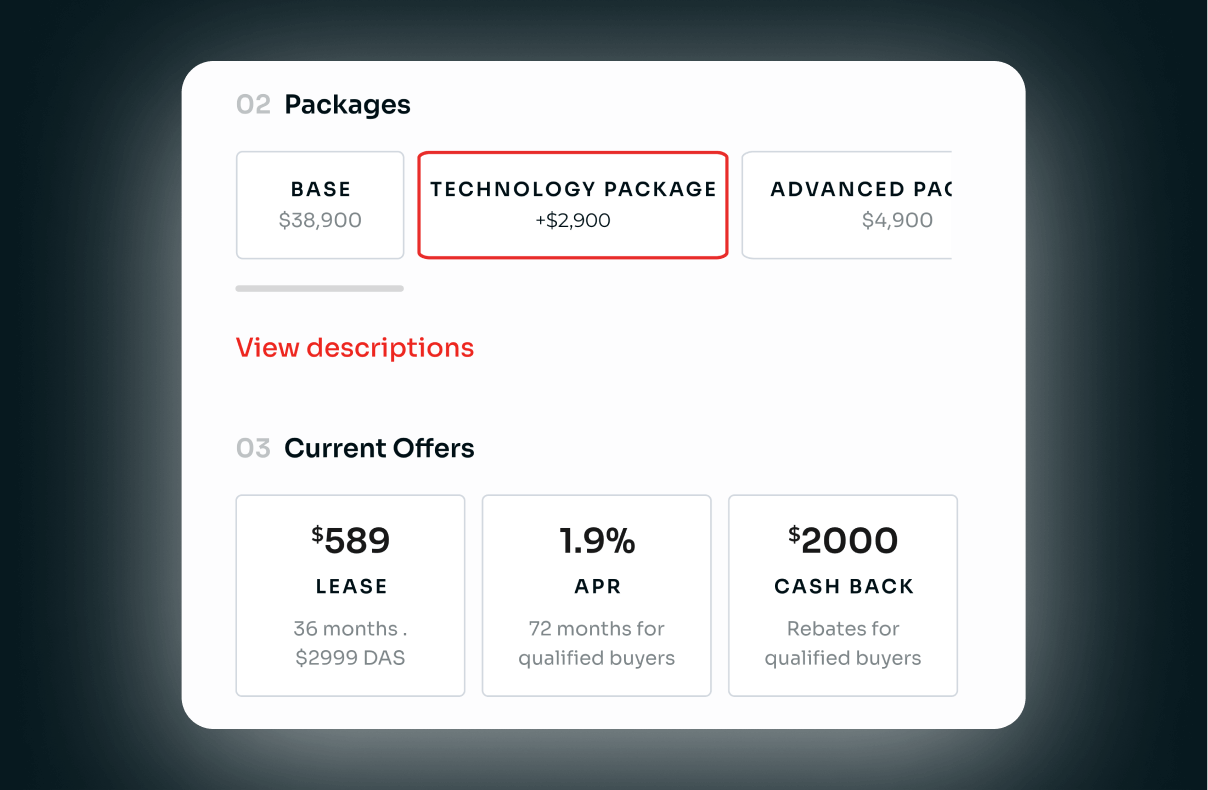
1.2 Offers at the trim level
Offers at the trim level engender an ethos of authenticity, unlike base model "in-the-door" incentives.
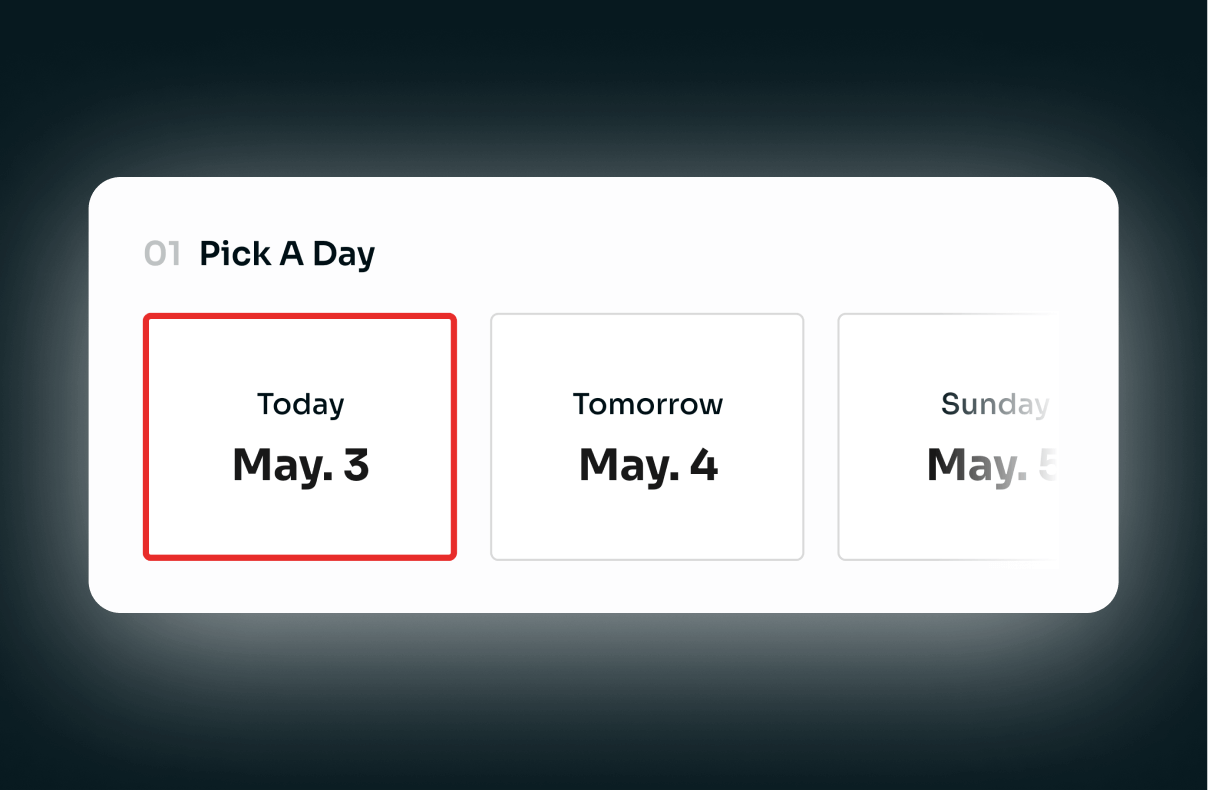
1.3 Seven day calendar
Research showed that 100% of leads booked their test drive via email within 7 days after contacting the dealer.
1.4 Time of day selectors
Users preferred casual timing for test drives such as morning and evening, as opposed to exact times.
Optimize for conversions
A variety of conversion rate optimization techniques were employed to meet client objectives, including design and machine learning tactics.
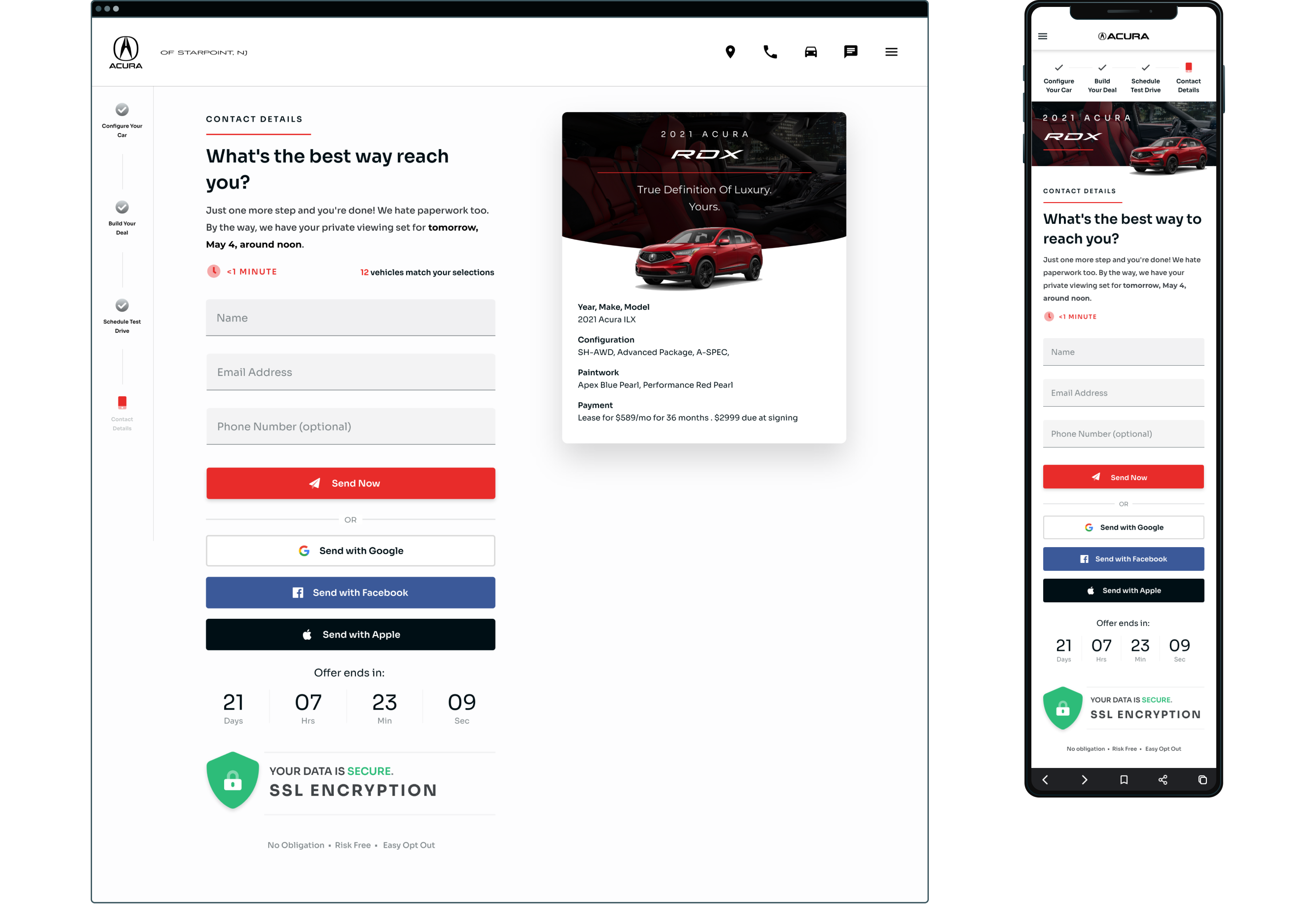
Lead capture
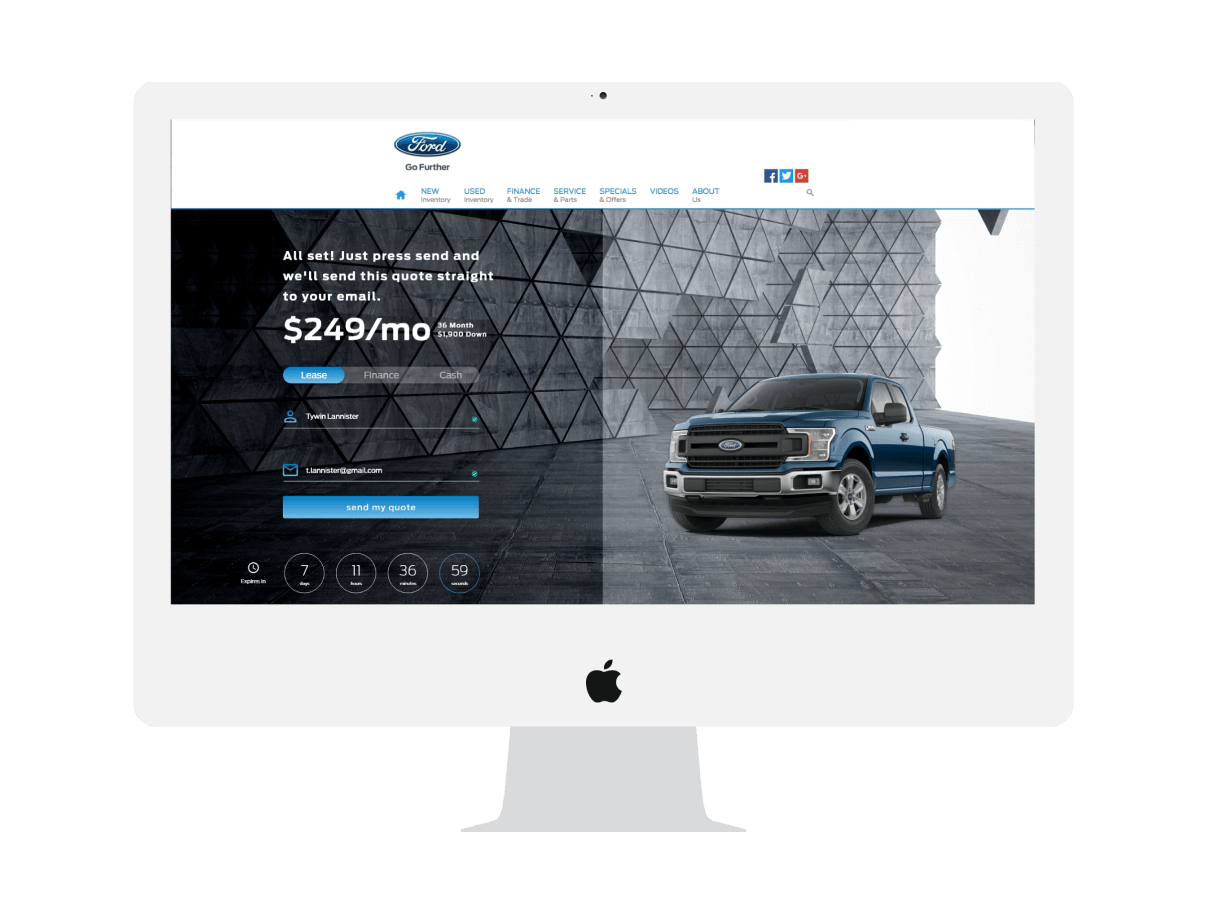
Awaiting users at the end of the form was a 7% CVR lead capture, replete with CRO tactics. Psychological hooks at play include temptation bundling, scarcity, trust signals, progressive disclosure, and the Sunk Cost Effect. These were reinforced by techniques such as personalized messaging, express contact options, and autocompletes that leverage browser data.
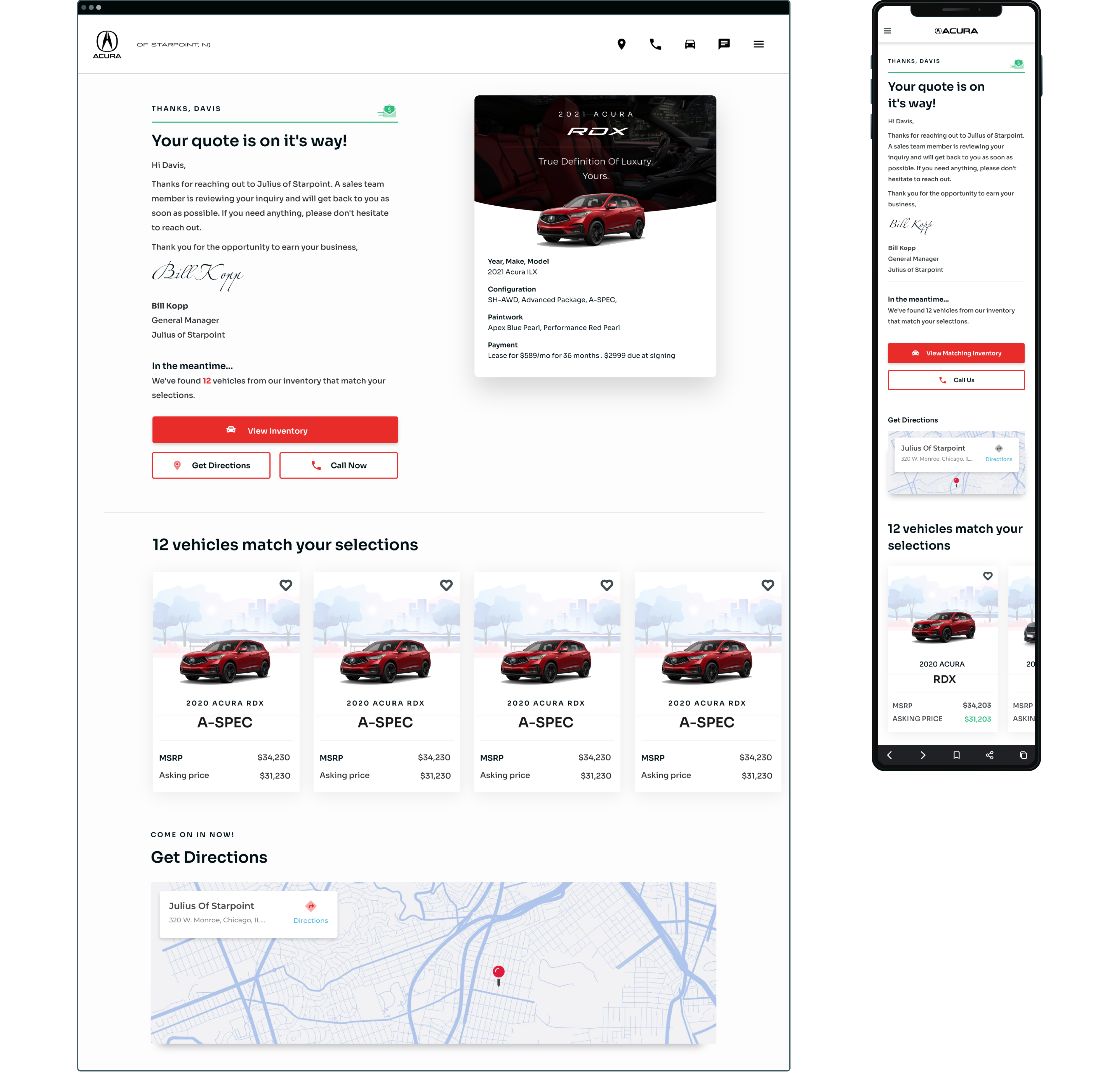
The thank you page
Leads are met with a signed letter from the dealer's general manager, and below are the in-stock vehicles that matched their selection, plus directions via Google. Looking back, I would add "# of Watchers" and "# of Offers" on each car to promote scarcity. I would also request location sharing at this point to display more personalized travel details.
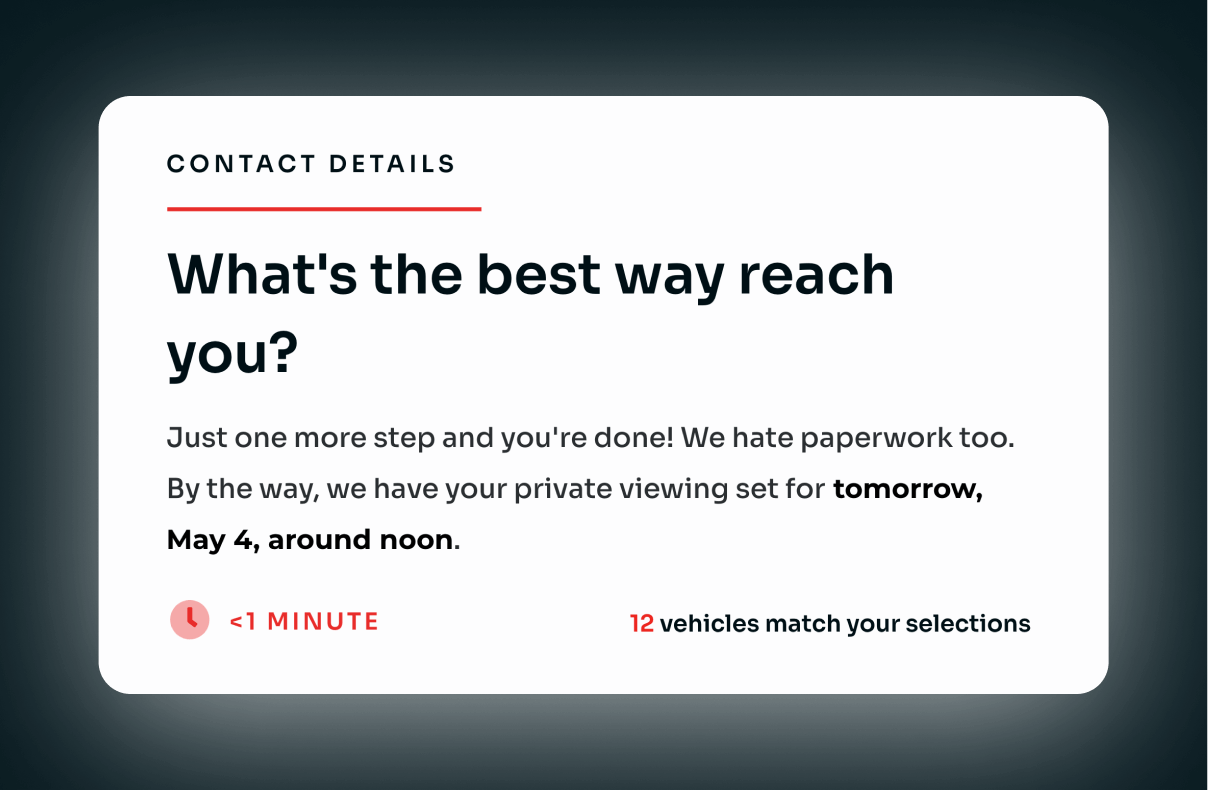
2.1 Personalized messaging
Bolded dynamic text pulled from the users' test drive date and time-of-day selections.
2.2 Express contact info
Sort of like the Polar Express, express options captured user contact information in 1-2 clicks.
2.3 Temptation bundling
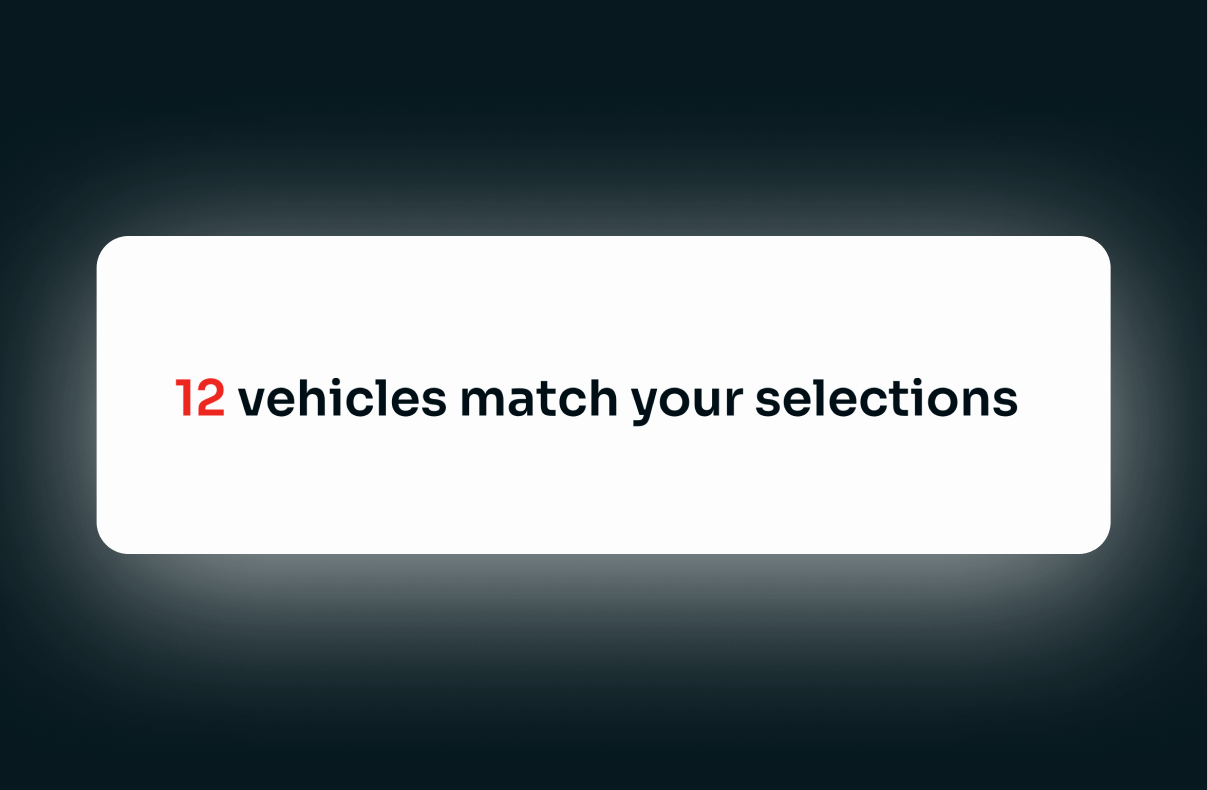
To sweeten the deal at the last second, I utilized progressive disclosure and temptation bundling, showing the number of matches user selections had to in-stock vehicles.
2.4 Scarcity and trust
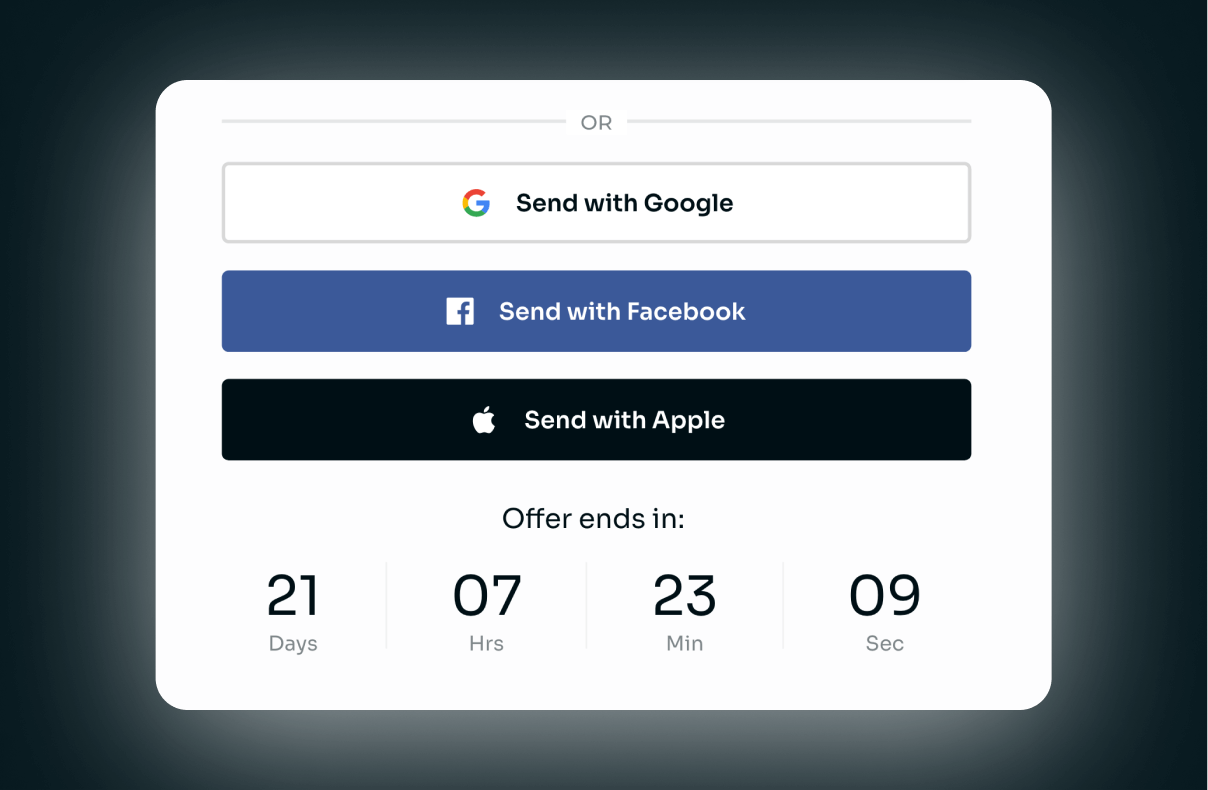
Employing the principle of scarcity, the countdown timer aligned with the natural cadence of monthly incentives from the OEM. The trust signal below was a way to allay fears of being haggled.

The splash page
Data Studio showed higher bounce rates on SEM traffic compared to internal traffic. It seemed buyers had a default bias and were reluctant to start a form before they could see the inventory. To counter this, we added a splash page that utilized the psychological principle of the Spark Effect by presenting a delightfully simple initial selection: users could go left to LeadRev, or right to the inventory. Moreover, giving them an alternative sidestepped the Reactance Effect. The result? Bounce rates were halved from 38% to 19%, internal traffic nearly doubled, and LeadRev conversions increased from 4.2% to 5.1%.
The genetic algorithm
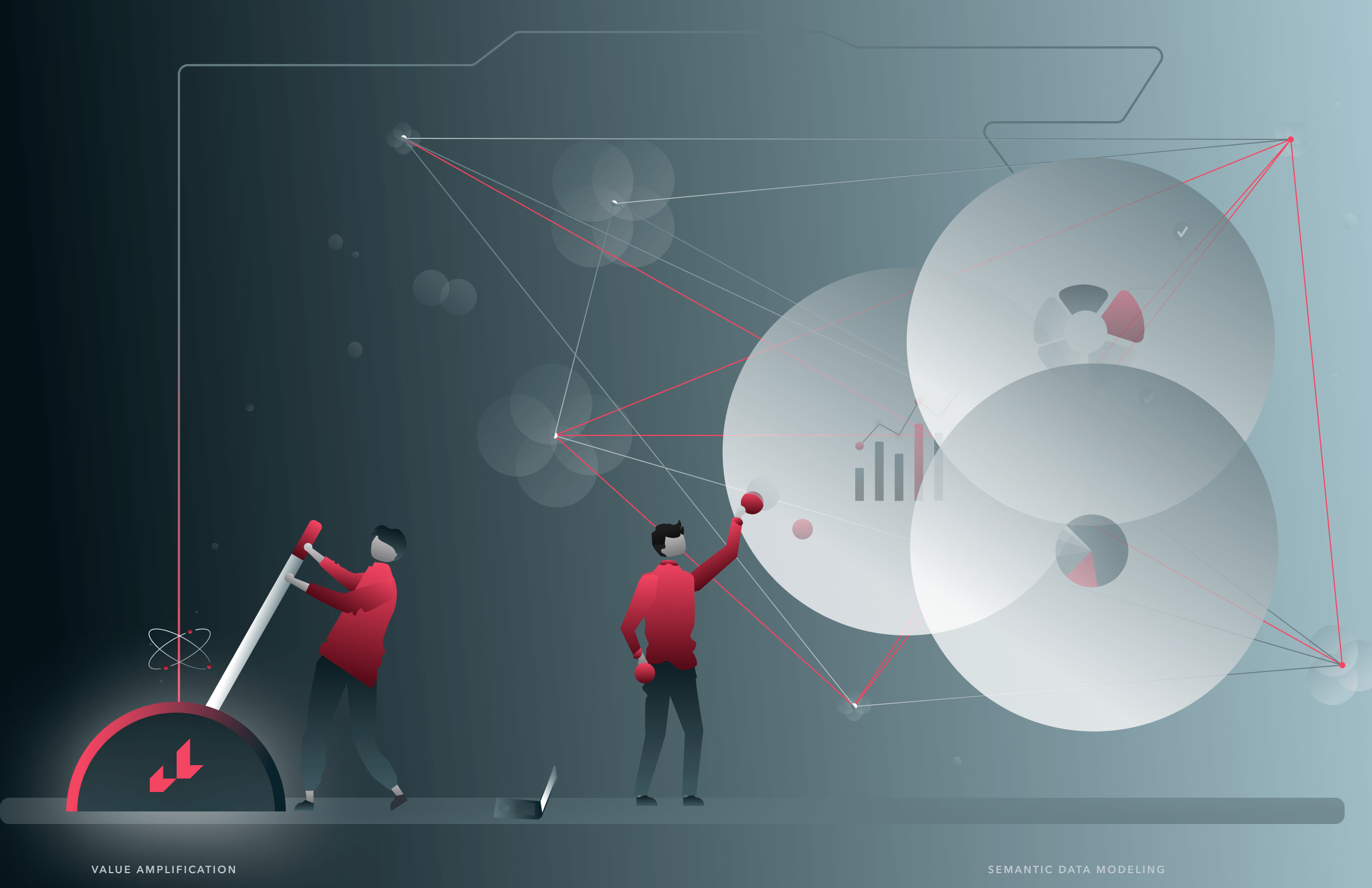
LeadRev's CRO engine utilized a genetic algorithm that analyzed engagement data across design variants and automatically served up conversion-optimized layouts. It tested up to 1.1 million combinations in a single multivariate test and output the winner. To facilitate the process, designers provided variations for microcopy, CTAs, step order, components, and layout to the ML team. This intensive collaboration between the design team and machine learning boosted average CVRs to 7%, with some outliers going as high as 11%.
Outcome & results
The insights from UXR combined with the CRO engine set the stage for LeadRev's success, with CVRs rising by 1,300% from 0.5% to 7% over the industry benchmark. Dealers would receive anywhere from 140-700 leads per month depending on session volume. LeadRev leads, which included a full buying profile of bottom-funnel shoppers, were priceless to dealerships. As a result, the company was able to charge $2k-10k / per month / per client for nearly 100 clients. The annual revenue for LeadRev in 2019 was $1.2M+ with 90% profit margins.
Up next
Continue exploring my work below.
.jpg)
.jpg)
.jpg)