Lightcast Composable AI Strategy


Significant friction on the path to data discovery
Recruiters using Lightcast struggled to generate insights quickly due to a labyrinthine report experience. They were required to select the right report from a library of dozens, then navigate dense filter menus and complex form fields—only to be overwhelmed by overly broad, static data dumps. Time-to-insight was long, cognitive load was high, and the experience was structured for outputs, not outcomes.
I flipped this model: instead of navigating to data, users now express what they’re trying to achieve in natural language. AI then surfaces relevant data blocks—modular, editable, and clear—reducing friction, minimizing noise, and accelerating path-to-action.

Users had to match the correct report to their desired outcome
Required upfront report selection without context, forcing guesswork and backtracking.

Intricate filters added friction to the goal
Dense filters and rigid flows blocked fast access to relevant insights or goals.

Reporting results were inundated with irrelevant data
Results were overloaded with dozens of charts, burying what users actually needed.

No ability to save data packets to create a final report
Users couldn’t cherry-pick insights or curate their own narrative from AI results—a missed value-add opportunity.

Usability issues put 250 accounts at risk
Core workflows were so unintuitive that key customers were preparing to churn—reporting confusion, inefficiency, and lack of ROI.
I got to work, conducting a heuristic evaluation, discovering 120+ usability issues.
Issues ranged from low hanging fruit to critical systemic usability issues rooted in the information architecture.

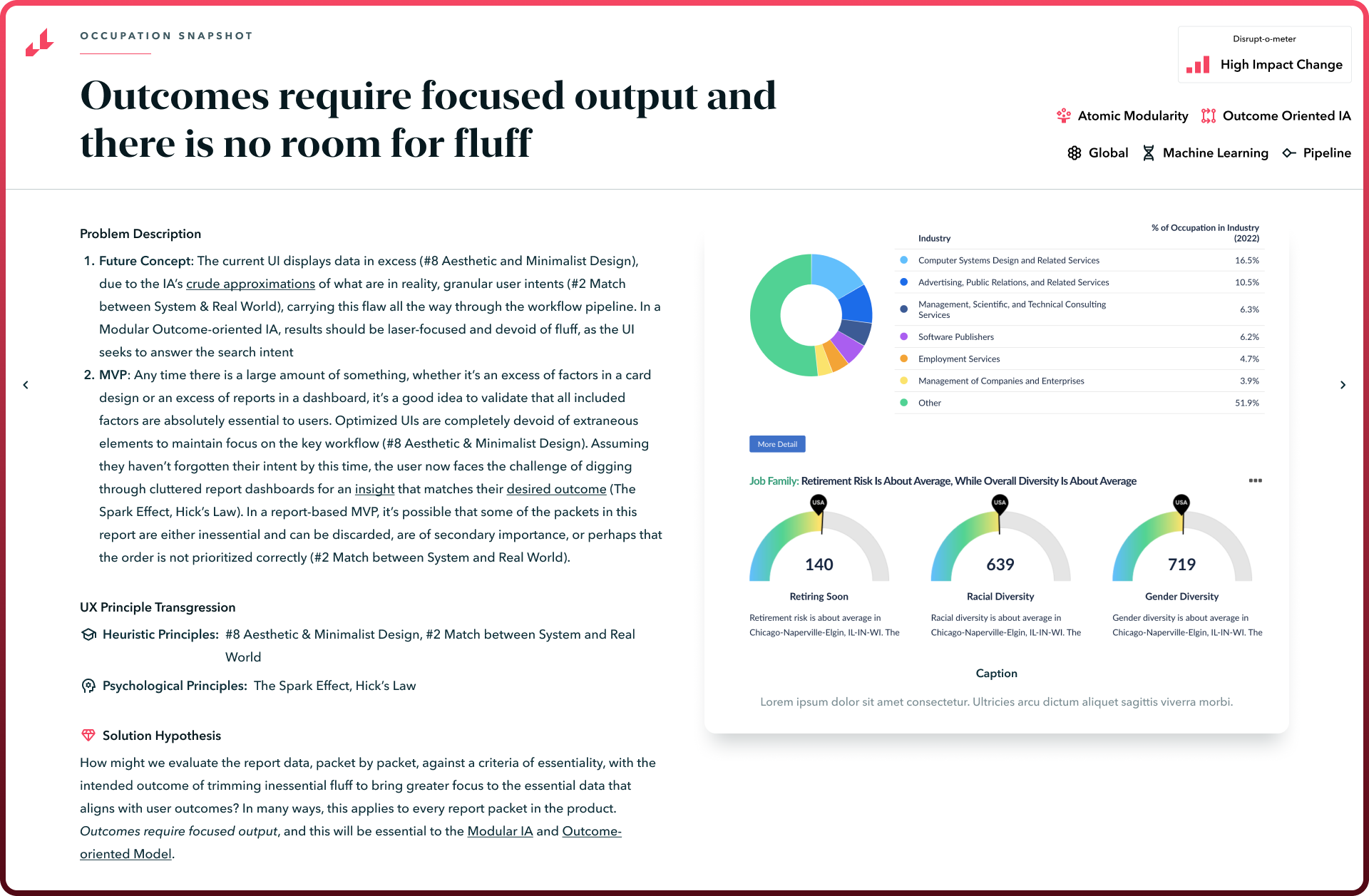
I synthesized findings into four UX themes, creating a cohesive AI product vision.
The original UI forced users to match their search intent to the right report. The redesign shifted the conversation from, "select a report" to “what are you trying to achieve?”—using LLMs to let users summon relevant data through intent.
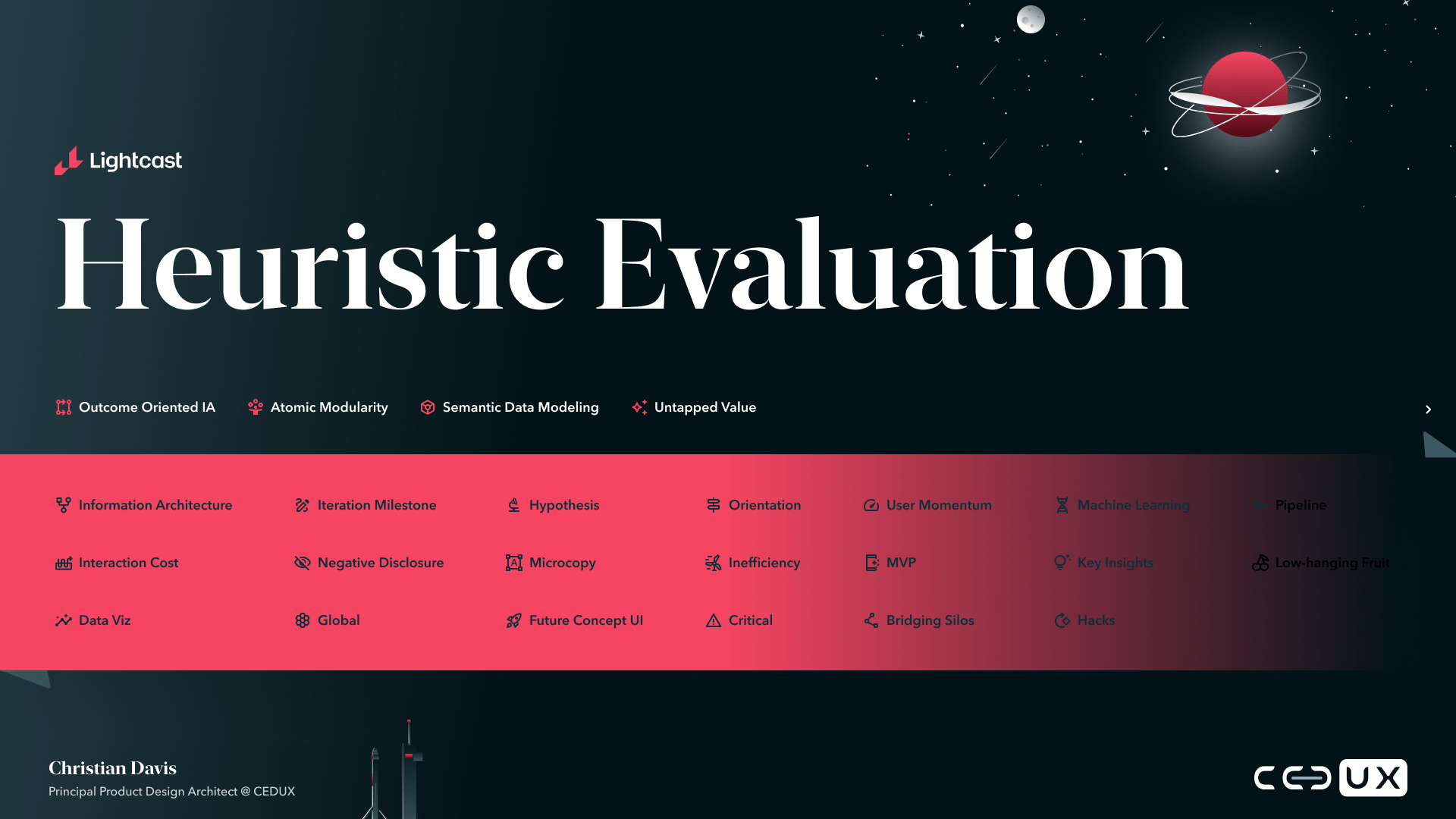
Outcome-oriented IA
The core paradigm of AI product design, outcome oriented information architecture inverts the relationship between users and data: instead of navigating rigid tree structures with high friction, users summon the data to them.

Modularity & composability
In build workflows, users can select the “gems” from AI-generated results and seamlessly assemble them into a final report. Insight becomes composable—built progressively as users construct and cherry pick top deliverables within the report workflow.

Semantic data mapping
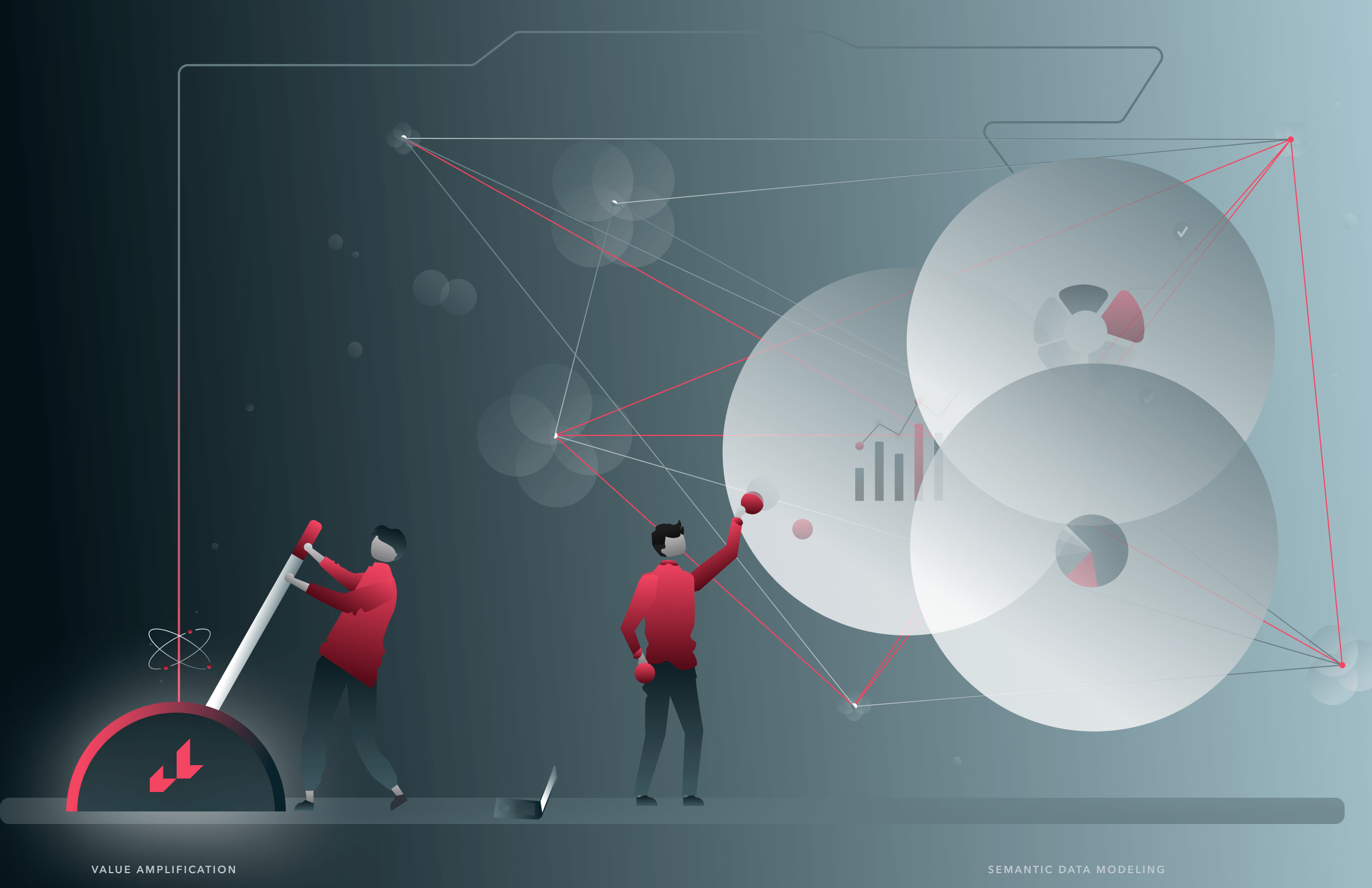
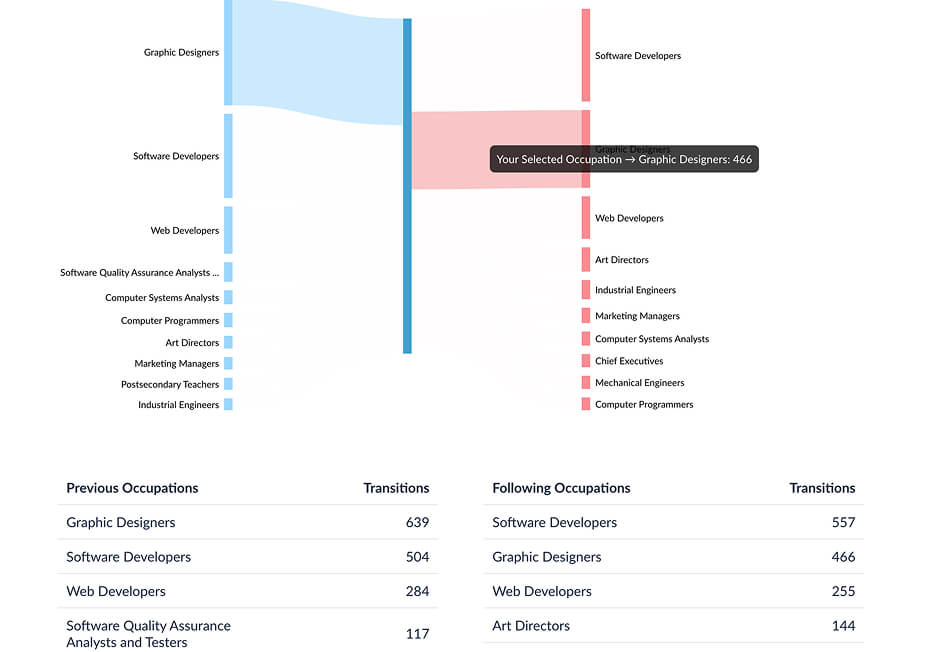
Instead of static categories, data is connected through meaning. Users move fluidly between concepts—mirroring how they think, not how the system is organized.

Untapped value
Users are unable to craft their final deliverable in-product, and are forced to build it in third party apps as a workaround—a missed value-add opportunity for the business. Moreover, users do not venture out to explore unfamiliar reports, and the underlying value of those reports remains untapped.

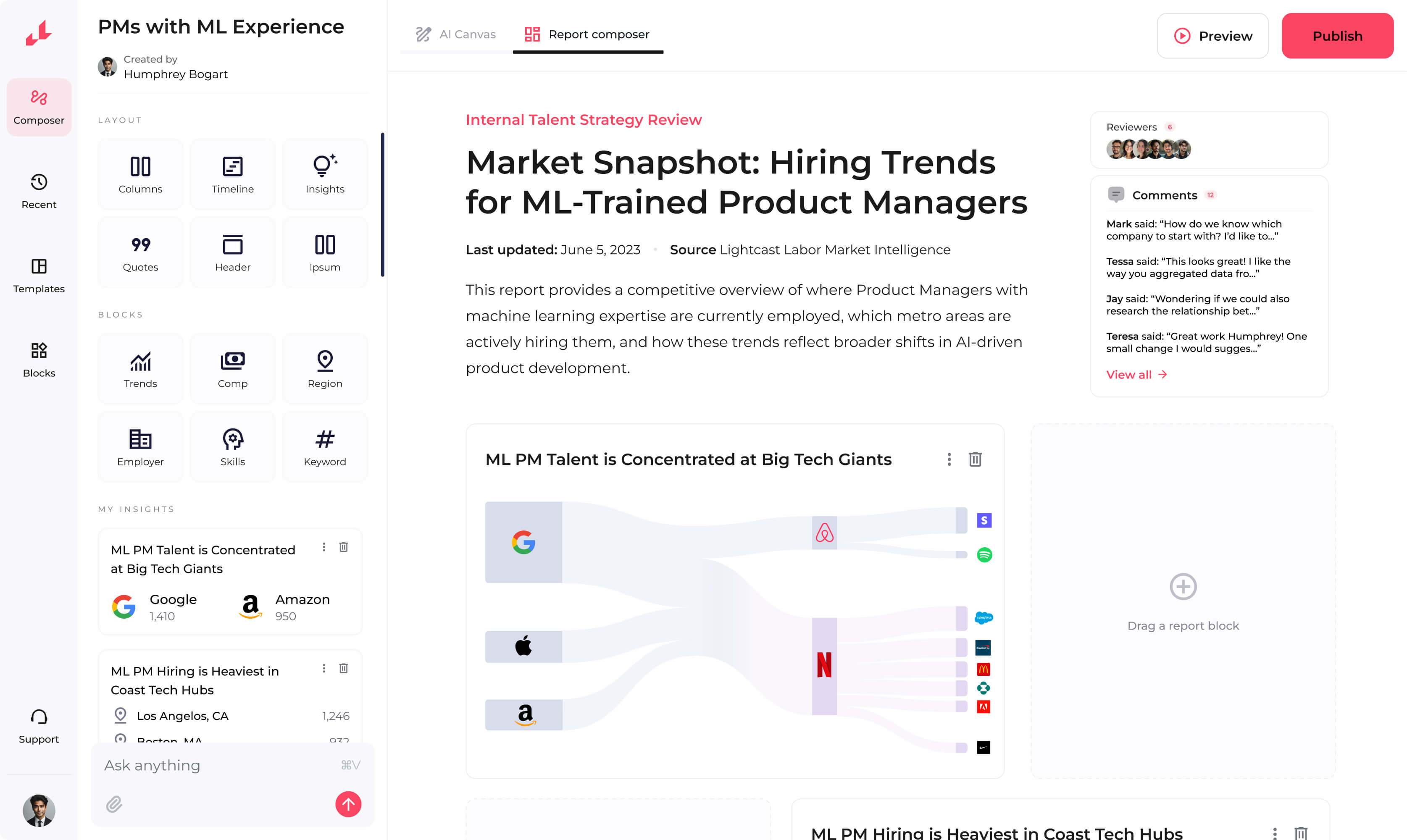
Wireframing the vision: an AI-powered report composition UI
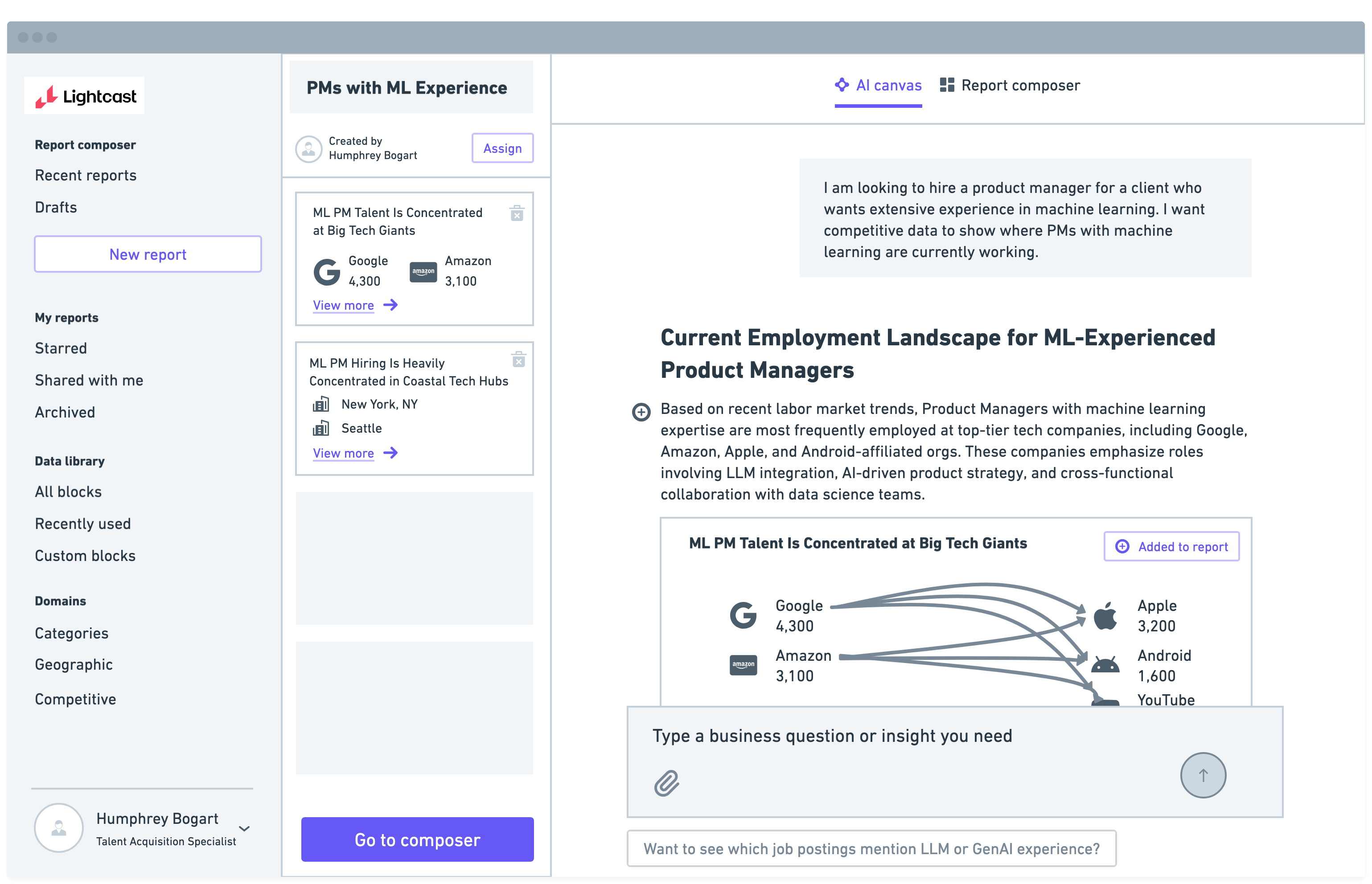
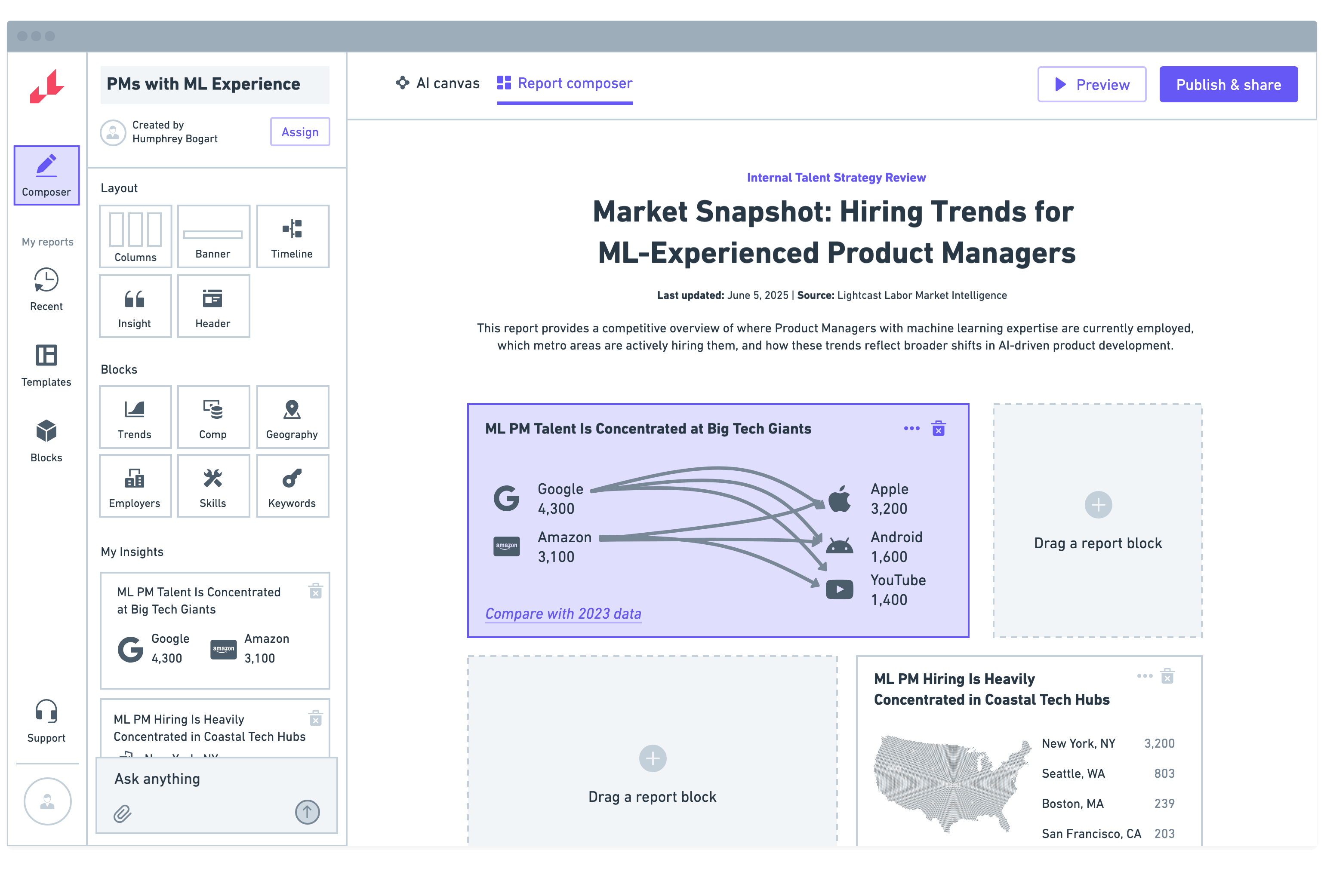
The wireframes were crafted to radically reduce interaction cost by shifting from dense filter-based navigation to natural language inputs. Users simply type what they’re trying to achieve, and AI surfaces relevant insights as modular data blocks. This approach enabled rapid, outcome-oriented exploration—allowing users to extract and compose reports in real time without navigating away from context.
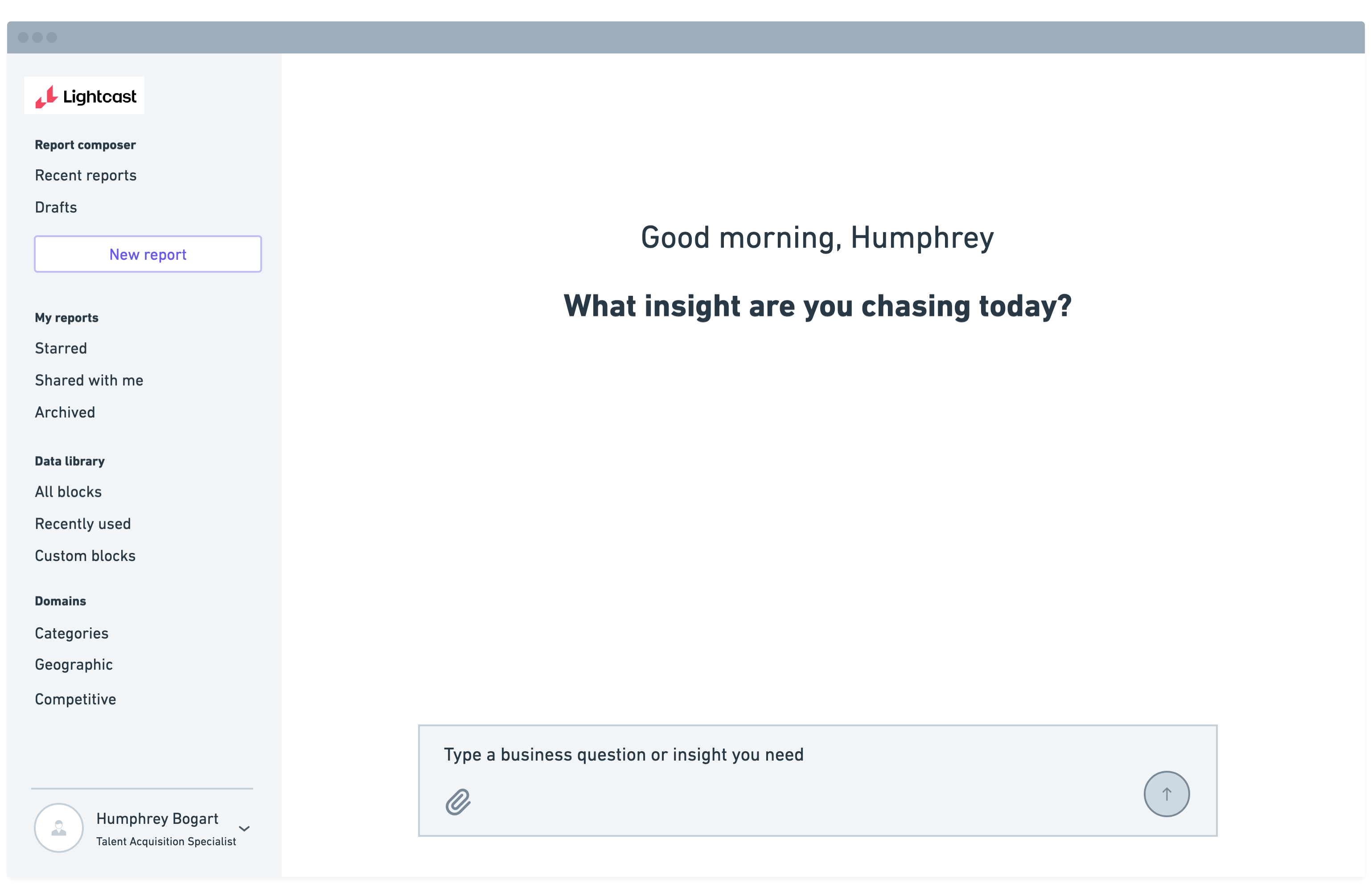
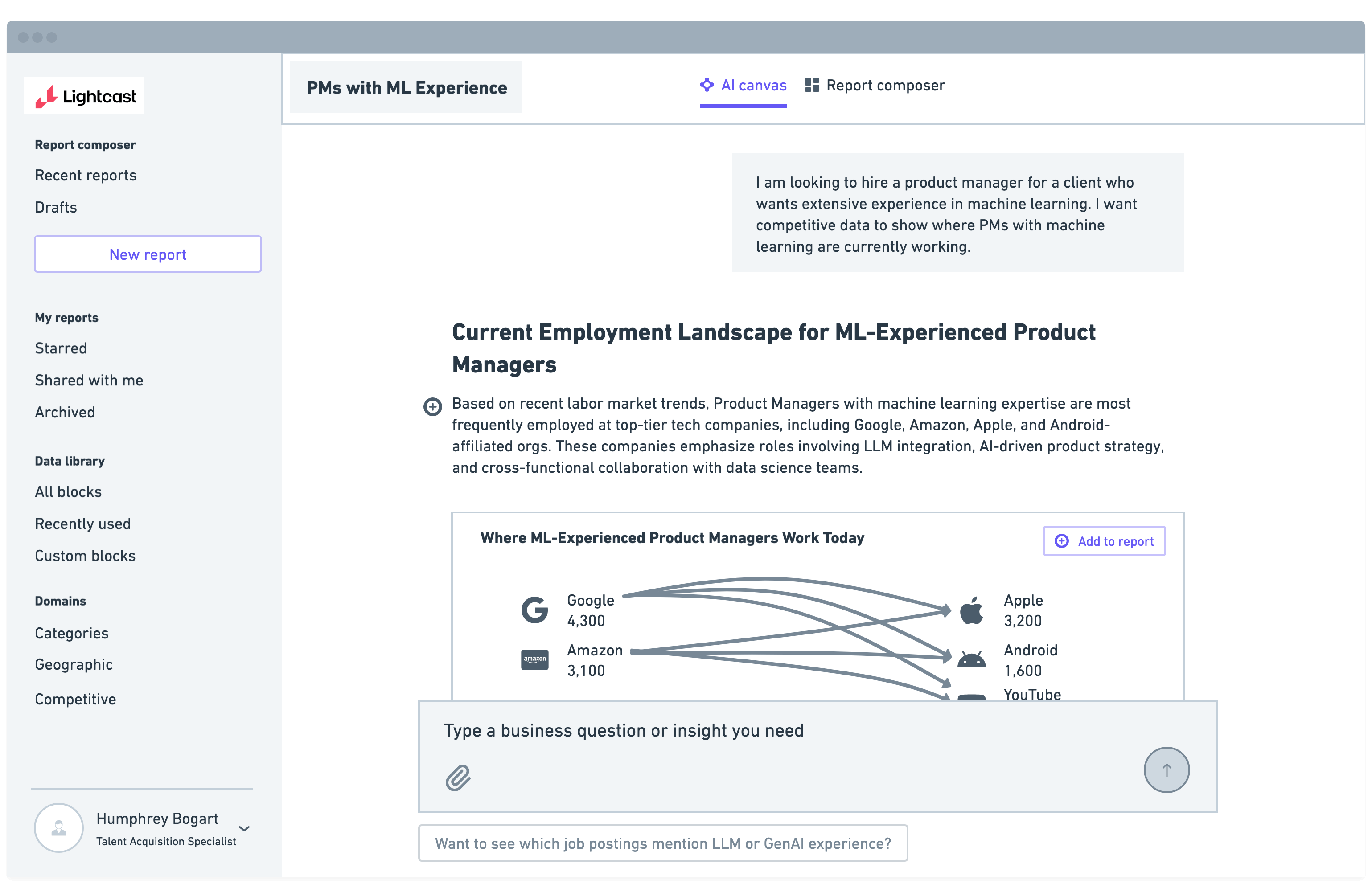
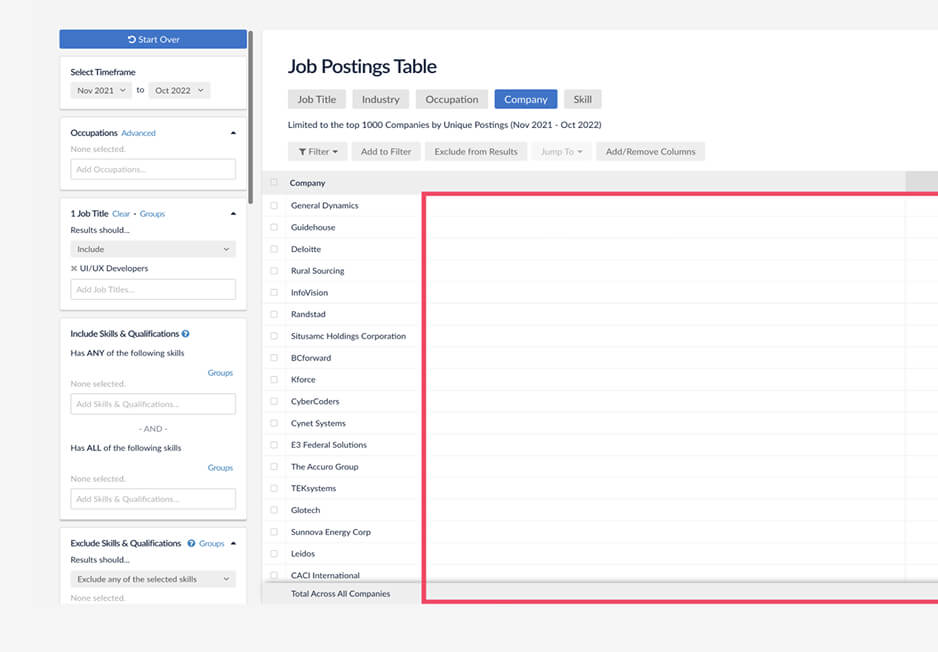
The <original UI> was weighed down by excessive interaction costs
Users had to guess which report matched their intent
Tedious filtering was required before any data was shown
Reports were overloaded with static, untargeted content
No ability to save or organize key insights across sessions
Navigating between related data meant starting over each time
High time-to-insight led to low perceived product value


The <final UI concept> resolved every core usability failure
Replaced report selection with a single conversational input field
Enabled users to type their intent and receive targeted data blocks
Introduced drag-and-drop insight modules to compose custom reports
Mapped AI results semantically so users could explore “nearby” insights
Allowed users to save insights across sessions as part of an evolving report
Improved visual hierarchy to reduce cognitive load and support fast scanning
Business outcome
The AI-driven redesign launched to 250 at-risk accounts as a pilot. Of those, 230 renewed their contracts, with the redesign cited as the primary driver of retention. The shift to an intent-based, modular interface was directly linked to usability improvements and increased perceived value.
At-risk accounts renewed
Users cited AI redesign as #1 reason for renewal
Minutes saved per report
The redesign reduced report creation time from 4.5 hours to just 30 minutes.


Caleb Smith
Product Manager, Lightcast


Jeffrey Simmons
Director of Product, Lightcast, Ex-Aquent
Up next
Continue exploring my work below.
.jpg)
.jpg)
.jpg)